凯瑞尔电子材料
1. Introduction
In the high-precision world of surface-mount technology (SMT), every component in the manufacturing chain plays a pivotal role in ensuring process efficiency, component integrity, and final product reliability. Among these, the reel—often referred to as the plastic spool or carrier tape reel—serves as the critical interface between component packaging and automated pick-and-place equipment. It is the reel that winds and transports the sealed carrier tape, protecting sensitive electronic components from physical damage, electrostatic discharge (ESD), and environmental contamination throughout the supply chain. A failure at this seemingly simple level can lead to production stoppages, component loss, and compromised quality. As SMT lines accelerate and component miniaturization advances, the demands on reels have grown: they must withstand high-speed unwinding, resist impact during logistics, and maintain stable anti-static performance. This article focuses on the 13-inch one-piece reel—an engineered solution that delivers superior anti-collision and impact-resistant properties while meeting the rigorous anti-static requirements of modern electronics manufacturing. We will explore the product’s structural design, material science, critical process parameters, common troubleshooting scenarios, quality inspection protocols, and a practical selection guide. By integrating technical depth with actionable insights, this paper aims to equip SMT engineers and procurement professionals with the knowledge to optimize their packaging operations.
2. Product Structure & Material Composition
2.1 One-Piece Integrated Design
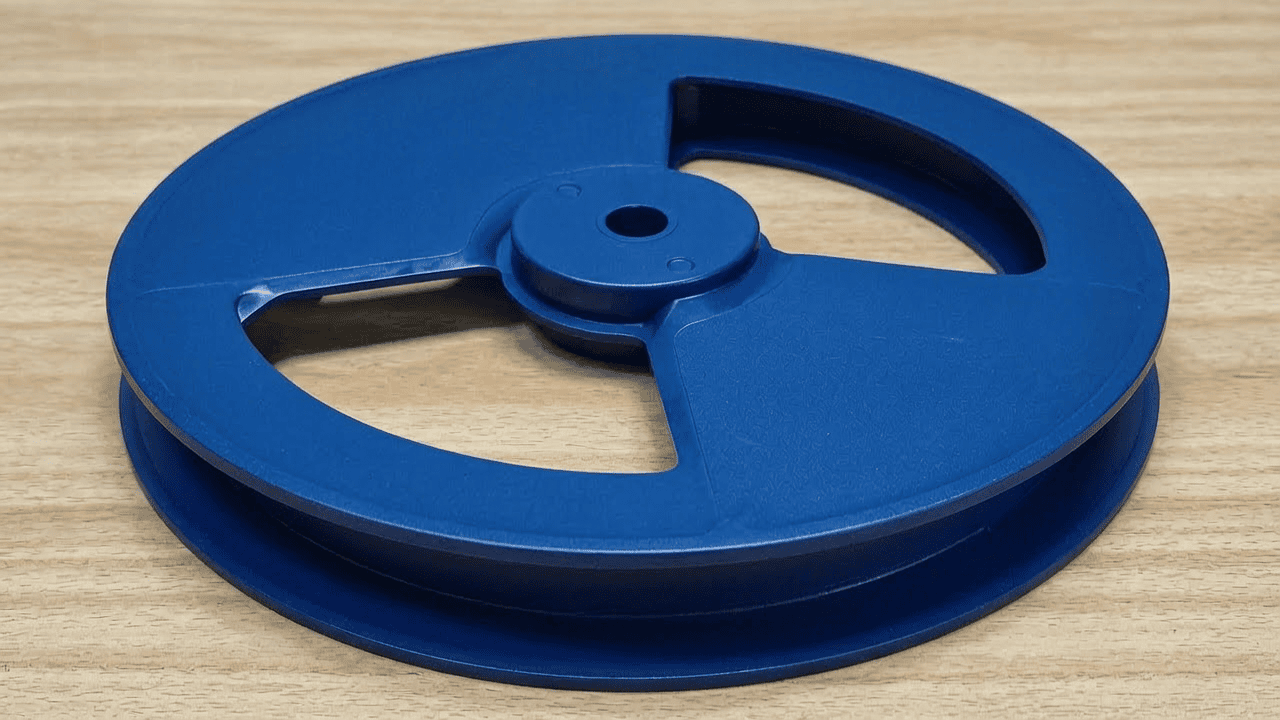
The 13-inch one-piece reel from Kairuie Electronic Materials Co., Ltd. represents a significant departure from traditional two-piece (separable flange and hub) reels. In a conventional reel, the flange and hub are manufactured separately and assembled, which can introduce assembly tolerances and potential weak points at the joining interface. Over time, repeated handling or impact events may loosen the connection, leading to flange wobble, tape misalignment, or even catastrophic separation during high-speed unwinding. The one-piece design eliminates these risks by molding the entire reel—both flanges and the hub—as a single, monolithic structure. This integration ensures perfect concentricity and parallelism between the flanges, minimizing run-out and providing a rock-solid foundation for precision tape winding. The structural homogeneity also enhances impact resistance: without seams or joints, stress is distributed uniformly across the reel body, enabling it to absorb shocks from drops or collisions during transportation without cracking. The robust one-piece construction is particularly beneficial for 13-inch reels, which are widely used for medium to high-volume production and must endure the rigors of automated handling systems and frequent warehouse movements.
2.2 Material Engineering for Impact Resistance
The choice of material is critical to achieving the desired balance of mechanical strength, electrical properties, and cost-effectiveness. Kairuie offers three base resin options: polystyrene (PS), polycarbonate (PC), and acrylonitrile butadiene styrene (ABS). PS provides good stiffness and dimensional stability at a lower cost, making it suitable for standard applications. However, for environments where impact resistance is paramount, PC is the recommended material. Polycarbonate is renowned for its exceptional toughness and impact strength—exceeding that of many other thermoplastics—while maintaining transparency and heat resistance. The one-piece reel manufactured from PC can withstand repeated drops from 1.5 meters onto concrete without structural failure, making it ideal for logistics-prone supply chains. ABS offers a balanced profile with improved impact resistance over PS and better surface finish, suited for general-purpose anti-static applications. To address electrostatic discharge concerns, the base material can be compounded with conductive carbon or dissipative polymers. The anti-static grades are classified as Conductive (surface resistivity typically 10³–10⁵ Ω/sq) and Dissipative (10⁶–10¹¹ Ω/sq), meeting the stringent requirements of ANSI/ESD S20.20. These treatments are homogeneously distributed, ensuring long-lasting and consistent anti-static performance throughout the reel’s service life, unlike topical coatings that may wear off.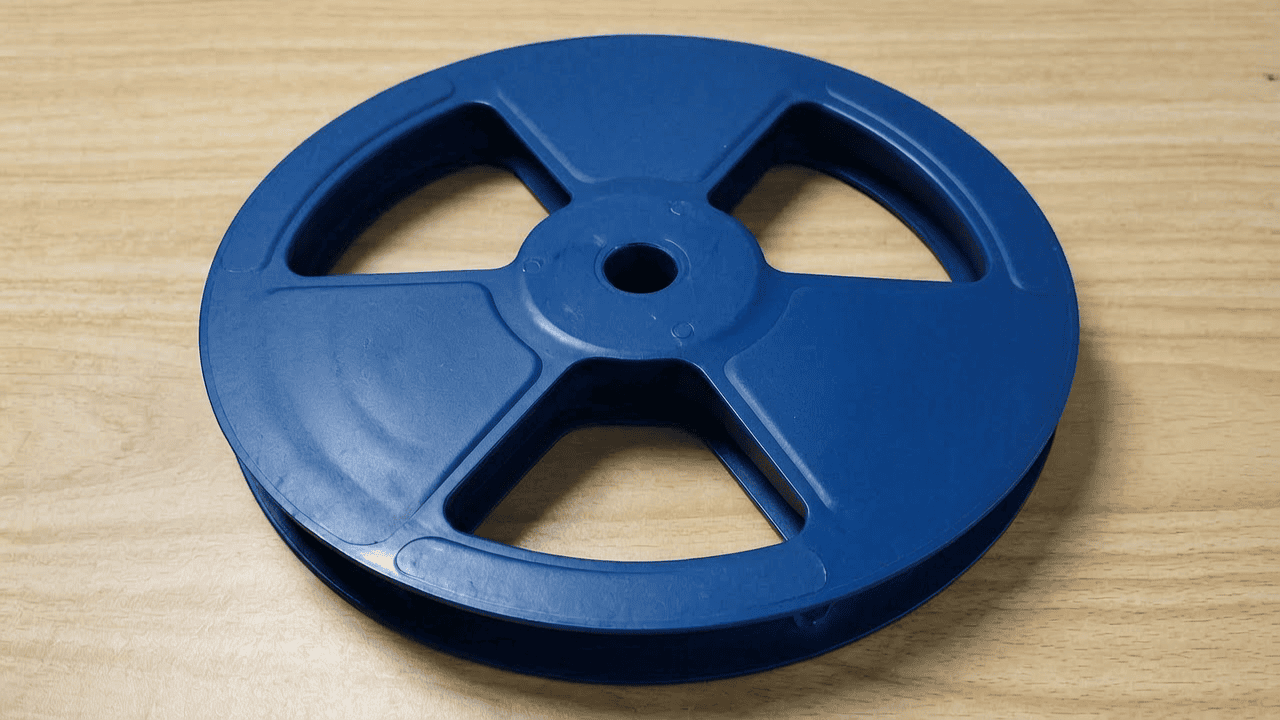
2.3 Dimensional Specifications and Color Coding
The 13-inch reel conforms to industry-standard dimensions: outer flange diameter approximately 330 mm, hub diameter designed to accommodate a wide range of carrier tape widths, and a standard bore to fit common feeder mandrels. The precise hub width can be customized to match specific carrier tape dimensions, ensuring optimal packing density. The one-piece design maintains tight tolerances: flange thickness uniformity within ±0.1 mm, bore concentricity within 0.05 mm, and flange parallelism deviation less than 0.2 mm across the diameter. Such precision guarantees smooth tape winding and unwinding without binding or slipping. Color coding plays a dual role in visual identification and anti-static functionality. Kairuie reels are available in Blue, Black, Transparent, and Pink. The Pink color is specifically associated with anti-static properties, providing instant visual confirmation of ESD-safe handling. Transparent reels allow visual inspection of the carrier tape and remaining component count without opening the packaging, while Blue and Black offer aesthetic and opacity options. All colors can be combined with either non-anti-static or anti-static material grades, ensuring flexibility for diverse application requirements.
3. Core Process Parameter Control
3.1 Storage and Handling Conditions
Proper storage of reels is essential to maintain their mechanical integrity and anti-static properties. Recommended storage temperature range is 15°C to 35°C with relative humidity below 60% RH. Exposure to temperatures above 50°C can cause thermal expansion and potential warping of the plastic reel, especially for PS-based materials. Conversely, extremely low temperatures below -10°C may embrittle the plastic, reducing impact resistance. Humidity control is critical for anti-static reels: high humidity can create a moisture layer on the surface, temporarily altering surface resistivity and leading to inconsistent ESD protection. Reels should be stored in their original packaging, away from direct sunlight and sources of heat or ozone, which can degrade the polymer. During handling, operators should wear gloves to avoid contamination and should not stack reels horizontally in a manner that concentrates load on the flanges. The one-piece design is less susceptible to warping under load compared to separable reels, but excessive stacking weight should be avoided.
3.2 Winding Tension and Tape Loading
When loading sealed carrier tape onto the reel, consistent winding tension is critical. The recommended tension range is 0.5 N to 1.5 N, depending on the tape width and material. Insufficient tension leads to loose winding, causing the tape to telescope or unwind during transport, while excessive tension can distort the tape pockets or induce excessive stress on the reel hub. For 13-inch reels, a constant tension winding machine with closed-loop feedback is recommended to maintain uniform tension from the hub to the outer diameter. The one-piece reel’s robust hub design prevents deformation even at the higher end of the tension range. Additionally, the leader and trailer lengths must comply with EIA-481 standards: at least 100 mm of leader and 200 mm of trailer are typical, ensuring proper feeding and end-of-reel detection. Regular verification of split axle alignment and winding shaft run-out (less than 0.1 mm) prevents uneven layer buildup that can cause tape camber.
3.3 Process Window Optimization
To maximize productivity and minimize defects, process engineers should define a process window that balances speed, tension, and environmental conditions. A design of experiments (DOE) approach can identify the optimal combination: for instance, winding speed of 100–300 rpm typically yields good results for 13-inch reels, but higher speeds may require tighter tension control to avoid oscillation. The one-piece reel’s higher structural rigidity allows a wider process window compared to separable reels, as it better resists the dynamic forces at play. In-line inspections every 100 reels can verify winding quality, and tension sensors should be calibrated monthly. For anti-static reels, surface resistivity should be spot-checked after winding to ensure it remains within the specified range; if values drift, it may indicate contamination or material inconsistency. Proactive process control reduces the incidence of tape misalignment, peel strength anomalies, and reel warpage.
4. Common Issues & Troubleshooting
| Symptom | Root Cause | Solution |
|---|---|---|
| Flange cracking or breakage after drop | Insufficient impact resistance due to material choice (e.g., PS) or manufacturing defect | Select PC material for high-impact applications; implement drop test in IQC; verify molding parameters to avoid stress concentrations |
| Inconsistent cover tape peel force | Excess winding tension causing crushing of adhesive layer; or reel flange warp causing uneven tape layering | Reduce winding tension; use reel with precise flange parallelism (≤0.2 mm); ensure tape is centered during winding |
| Static discharge damages components | Anti-static grade inadequate or surface resistivity out of spec; humidity too low | Verify reel’s anti-static grade (Conductive/Dissipative); control factory humidity >30% RH; use pink anti-static reels for visual assurance |
| Carrier tape rubbing against flange (scribing) | Reel bore concentricity error or misaligned mount on winder | Check reel bore tolerance; ensure winding machine axle is true; use one-piece reel for better concentricity |
5. Quality Inspection Standards
5.1 Incoming Quality Control (IQC)
A robust IQC process is the first line of defense against reel-related defects. Upon receipt, a statistically significant sample (e.g., based on ANSI/ASQ Z1.4, AQL 1.0) should be drawn from each lot. Visual inspection under controlled lighting checks for surface defects such as cracks, sink marks, flash, or color inconsistency. Dimensional inspection verifies flange diameter (330 ± 1 mm), hub bore diameter, flange thickness, and flange parallelism using calipers and a dial indicator. The critical parameter of hub run-out should be kept below 0.1 mm. For anti-static reels, surface resistivity is measured using a concentric ring probe per IEC 61340-2-3; the values must fall within the specified range (Conductive: 10³–10⁵ Ω/sq; Dissipative: 10⁶–10¹¹ Ω/sq). Additionally, peel strength of the cover tape from the carrier tape—while not a direct reel property—is often influenced by winding and can be spot-checked. Records of material certification (PC/PS/ABS grade, anti-static additive content) should be maintained for traceability.
5.2 In-Process Quality Control (IPQC)
During production, IPQC ensures that reels consistently meet design specifications. Sampling frequency is typically hourly or every 200 cycles, with a sample size of 5 reels per check. Molding parameters such as injection temperature, holding pressure, and cooling time are monitored to prevent warpage. Anti-static reels undergo surface resistivity testing on multiple points (flange and hub) to confirm uniformity. A drop test from 1.2 meters is performed on random samples to simulate transportation shocks; the one-piece reel must exhibit no cracks or permanent deformation. Dimensional checks are repeated using go/no-go gauges for bore and flange thickness. Data is plotted on control charts to detect trends. Any out-of-specification event triggers immediate containment and root cause analysis, leveraging the one-piece design’s consistent quality record.
5.3 Reliability Testing
To guarantee long-term performance, reliability tests simulate extended use and harsh conditions. Accelerated aging at 85°C and 85% RH for 1000 hours assesses material degradation; the reel must retain ≥80% of its initial impact strength and surface resistivity within specification. Thermal cycling between -40°C and 85°C for 100 cycles exposes potential delamination or cracking—the one-piece construction eliminates interface failure modes. Transportation simulation per ISTA 1A (or equivalent) subjects packaged reels to vibration, compression, and drop sequences. The test criteria: no flange breakage, no hub displacement, and the wound tape must remain intact without unwinding. For anti-static reels, resistivity is re-measured post-testing to verify permanence. These rigorous protocols position the Kairuie 13-inch one-piece reel as a high-reliability choice for military, automotive, and medical electronics applications.
6. Selection Guide
| Application Scenario | Recommended Size | Material | Anti-Static Grade | Color |
|---|---|---|---|---|
| Passive components (0402, 0603) in high-volume production | 7-inch or 13-inch | PS (cost-effective) | Dissipative | Pink |
| Small-outline ICs (SOIC, TSSOP) with medium volumes | 13-inch | ABS | Conductive | Black or Blue |
| Large QFP/BGA packages where impact risk is high during logistics | 13-inch | PC (impact-resistant) | Conductive | Transparent (for visual inspection) |
| General purpose, mixed components in ESD-safe area | 13-inch | PS or ABS | Dissipative | Pink |
7. Conclusion
The 13-inch one-piece reel engineered by Kairuie Electronic Materials Co., Ltd. stands at the intersection of innovative design and material science, addressing the critical demands of modern SMT packaging. Its monolithic construction eradicates the vulnerabilities of separable reels, delivering unmatched anti-collision and impact resistance that ensures component safety from factory floor to placement machine. The availability of PS, PC, and ABS materials, paired with precise anti-static grading, provides a tailored solution for any application scenario, from cost-sensitive passive components to high-reliability IC packaging. As this article has demonstrated, adherence to recommended process parameters, coupled with rigorous IQC and IPQC protocols, unlocks the full potential of the reel, minimizing downtime and maximizing yield. For engineers and procurement specialists seeking a reliable, durable, and technically advanced reel solution, Kairuie invites you to explore the full product range at www.kairuie.com. We welcome inquiries, technical discussions, and collaborative opportunities to advance SMT packaging efficiency together.