凯瑞尔电子材料
1. Introduction
Automotive electronics have become the cornerstone of modern vehicle innovation, driving advancements in electric vehicles (EVs), advanced driver-assistance systems (ADAS), and infotainment. The harsh operating environment of automotive applications—extreme temperature swings from -40°C to +150°C, constant vibration, and exposure to humidity, salt spray, and corrosive gases—imposes exceptional demands on every component. Surface-mount technology (SMT) packaging materials, often overlooked as mere consumables, play a pivotal role in safeguarding sensitive electronic components from production through assembly and during the entire vehicle service life. A single point of failure in packaging can lead to delamination, oxidation of solder pads, or ESD damage, compromising the reliability of safety-critical systems like engine control units or battery management systems.
Kairuie Electronic Materials Co., Ltd. addresses these challenges with a comprehensive portfolio of SMT packaging tapes engineered specifically for automotive-grade reliability. This article explores the key technical aspects of our carrier tape, cover tape, and backing tape solutions, delving into material composition, critical process controls, troubleshooting, quality assurance protocols, and application-specific selection guides. By integrating advanced polymer science with precision manufacturing, Kairuie ensures that each tape reel delivers consistent protection for the journey from wafer fabrication to the final vehicle assembly line.
2. Product Structure & Material Composition
2.1 Layer Architecture and Materials
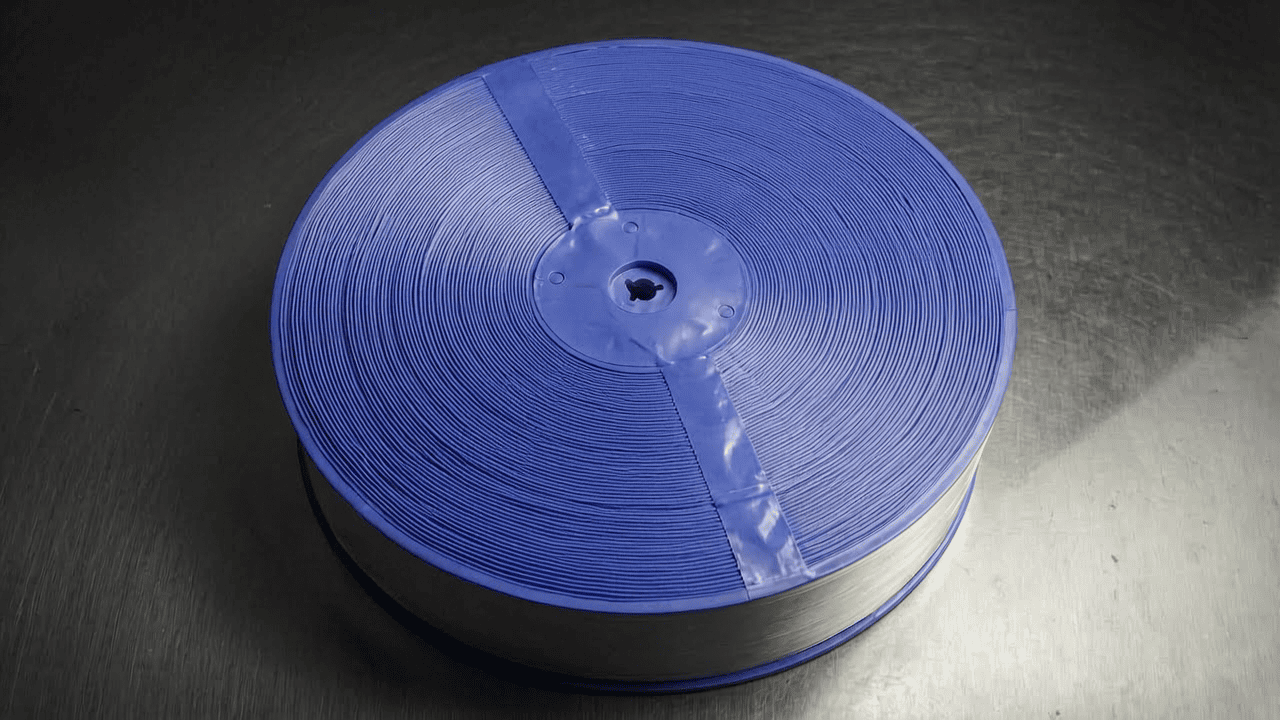
Kairuie’s automotive packaging tapes are built upon a layered composite structure, each layer optimized for a specific function. The base layer of our carrier tapes is constructed from a proprietary blend of polyethylene terephthalate (PET) with a thickness ranging from 0.20 mm to 0.35 mm, depending on pocket depth requirements. This PET exhibits a glass transition temperature (Tg) exceeding 160°C, ensuring dimensional stability during high-temperature component baking and lead-free soldering profiles. The adhesive layer for pressure-sensitive cover tapes (PSA) is a silicone-modified acrylic system that provides a consistent peel force of 30–50 gf across the full width, maintaining adhesion integrity from −40°C to +125°C. For heat-activated cover tapes (HACT), the adhesive is a thermoplastic copolymer that melts at 130 ± 5°C, creating a hermetic seal when applied with controlled heat and pressure.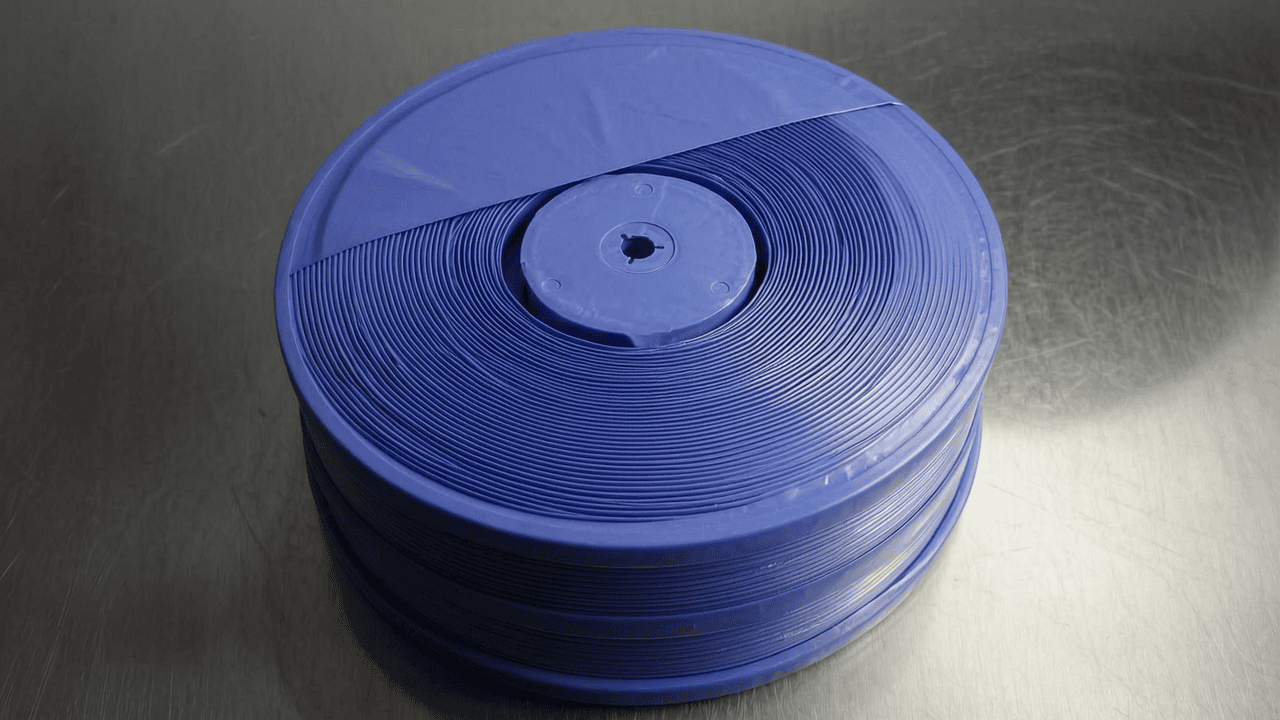
For specialty applications like inductor coil molding, our KR-600HTS Backing Tape incorporates an additional silicone‑based release treatment on the pocket surface. This treatment delivers an ultra‑low surface energy of ≤18 mN/m, ensuring clean release after high‑temperature epoxy curing without residue that could contaminate component terminals. Key physical parameters across our product lines include:
- Surface resistivity: 10⁵–10¹¹ Ω/sq (static dissipative range per ANSI/ESD S541)
- Static decay time: <2.0 seconds from ±1000 V to ±100 V
- Pocket dimensional tolerance: ±0.03 mm for standard pockets, enhanced to ±0.02 mm for ultra‑fine pitch devices
- Burr height: <0.01 mm on all punched edges, verified by 100× optical inspection
2.2 Advanced Contamination Control from Raw Material to Finished Reel
Automotive electronic components, especially MEMS sensors and high‑frequency RF modules, are hypersensitive to particulate contamination. Kairuie manufactures all automotive‑grade tapes in an ISO Class 7 cleanroom (core extrusion and forming areas) with adjacent ISO Class 8 for slitting and packaging. Particulate monitoring confirms that ≥0.5 µm particles are maintained below 352,000 per cubic meter, with air change rates exceeding 25 times per hour. In addition, a positive pressure differential of ≥10 Pa relative to non‑clean areas prevents infiltration of external fibers.
To eliminate inherent particle generation, our high‑precision tungsten‑carbide die sets achieve burr‑free edges, and the PET base film is ultrasonically washed and vacuum‑dried before forming. Every component is double‑sealed in anti‑static bags within the cleanroom, ensuring that the product reaches the customer in a state of guaranteed cleanliness. This particulate control regimen aligns with the stringent requirements of AEC‑Q200 qualified passive components and is critical for preventing intermittent short circuits caused by loose particles inside sealed modules.
3. Core Process Parameter Control
3.1 Temperature, Pressure, and Dwell Time Optimization
The adhesion of cover tape to carrier tape is the most critical process step in tape sealing, directly affecting component security during transport and peel performance at the SMT pick‑and‑place nozzle. For Kairuie’s heat‑activated cover tapes (e.g., KR‑HACT200 series), the recommended sealing parameters are as follows: sealing head temperature 130–150°C, applied pressure 0.3–0.5 MPa, and dwell time 0.3–0.5 seconds. Lower temperatures may result in incomplete bonding, leading to tape separation during reel winding; excessively high temperatures can distort the PET carrier tape, altering pocket geometry and causing component jamming.
For pressure‑sensitive cover tapes (KR‑PSA300 series), the process window is defined by lamination roller pressure (0.2–0.4 MPa) and speed (typically 2–5 m/min). Ambient temperature should be maintained between 20°C and 25°C for optimal adhesive flow. In both cases, an inline peel force tester should be employed to verify that peel force remains within the target range of 40–70 gf for automotive applications, ensuring that the tape neither detaches during high‑velocity reel changes nor requires excessive force that could induce component lift.
3.2 Process Window Validation and Statistical Control
To guarantee lot‑to‑lot consistency, Kairuie recommends performing a design of experiments (DOE) for each new tape‑carrier combination, mapping peel force and visual seal integrity against temperature and pressure settings. Once a nominal setpoint is established, a control window of ±5°C and ±0.05 MPa should be monitored with statistical process control (SPC) charts. Our tape samples, enclosed with every shipment, allow customers to replicate these validation tests using their own sealing equipment. For high‑volume automotive production, we further suggest installing automated optical inspection (AOI) at the sealing station to immediately detect incomplete seals, tape skew, or pocket deformation, reducing the potential for field failures to near zero.
4. Common Issues & Troubleshooting
Even with rigorous process controls, deviations can occur. The following table summarizes the most frequent issues encountered in automotive SMT tape sealing and their root causes and solutions, drawing on Kairuie’s field application experience.
| Symptom | Root Cause | Solution |
|---|---|---|
| Cover tape lifting or detachment during reel winding | Insufficient seal temperature or pressure; contamination on carrier tape seal area | Increase sealing head temperature by 5°C increments; verify pressure uniformity across the shoe; clean seal area with IPA if necessary; consider switching to wider seal width cover tape. |
| Excessive peel force causing component popcorning or pad lifting | Over‑heating of heat‑activated adhesive or aggressive PSA formula | Lower sealing temperature within the recommended range; verify dwell time is not excessive; for PSA, check if ambient humidity has plasticized adhesive—use a lower‑tack PSA variant (e.g., KR‑PSA300‑LT). |
| Particle contamination visible inside sealed pockets | Burr generation from worn die; handling outside cleanroom; electrostatic attraction | Inspect die condition and replace if burr height >0.01 mm; ensure unpacking and splicing are performed in an ISO Class 8 or better environment; verify surface resistivity of tape remains within 10⁵–10¹¹ Ω/sq to minimize static dust attraction. |
| Backing tape residue sticking to inductor bottom after curing | Release coating deterioration due to prolonged exposure to >180°C | Verify curing profile does not exceed 165°C peak; switch to high‑temperature release backing tape (KR‑600HTS‑HT) rated for 200°C intermittent exposure; ensure accurate temperature profiling with thermocouple in actual pockets. |
| Tape telescoping or uneven winding on reel | Inconsistent tension during re‑reeling; flange damage | Maintain constant winding tension ≤1.5 N; inspect reel flanges for flatness; use only Kairuie‑approved reels with 0.5 mm flange run‑out tolerance. |
5. Quality Inspection Standards
5.1 Incoming Quality Control (IQC)
At receipt, automotive‑grade tapes must undergo a thorough IQC regimen. Visual inspection under 10× magnification checks for surface defects, delamination, or foreign inclusions. Critical dimensional checks include overall tape width (tolerance ±0.1 mm), pocket center‑to‑center spacing (±0.05 mm), and pocket depth (±0.03 mm) using a coordinate measuring machine or laser profilometer. Peel force is tested according to EIA‑481 standards: a sample length is sealed under standard conditions, and the cover tape is peeled at 180° with a speed of 300 mm/min; the average peel force must fall within 30–70 gf for automotive components. Additionally, surface resistivity is verified using a concentric ring probe at 100 V, ensuring compliance with the specified ESD range.
5.2 In‑Process Quality Control (IPQC)
During assembly, Kairuie advises sampling at a frequency of one reel per production lot or every 500 meters of tape, whichever is more frequent. Checks include seal integrity via a vacuum decay test (no bubbles when submerged under water at −0.5 bar vacuum) and pocket alignment using a go/no‑go gauge. For backing tapes used in inductor molding, a sacrificial test strip is processed through the bake cycle to verify no residue remains after peel. Any deviation from acceptance criteria triggers a halt and root‑cause investigation. Data is recorded in an SPC database to detect trends before they become out‑of‑specification.
5.3 Reliability Testing
Automotive applications demand extended reliability testing beyond standard commercial requirements. Kairuie’s tapes are subjected to the following qualification protocol, in alignment with AEC‑Q200 stress tests:
- High‑temperature storage: Tapes aged at 150°C for 1000 hours, then checked for peel force retention (>80% of initial) and dimensional stability (<0.1% shrinkage).
- Temperature cycling: −40°C ⇄ 125°C, 500 cycles, 30‑minute dwells; no delamination or cracking permitted.
- Humidity resistance: 85°C / 85% RH for 1000 hours; peel force must not increase by more than 20%, and surface resistivity must stay within the specified ESD range.
- Transportation simulation: Packaged reels undergo random vibration per ISTA‑3A profiles, followed by visual inspection and peel test—no cover tape lifting or pocket deformation allowed.
These tests collectively ensure that Kairuie tapes maintain their protective function from the component manufacturer’s cleanroom, through global shipping, and into the harsh under‑hood environment.
6. Selection Guide
Choosing the correct tape configuration is critical for maximizing yield and reliability. The table below provides a rapid selection matrix based on component type and the primary packaging challenge.
| Application / Component Type | Primary Challenge | Recommended Kairuie Solution | Key Parameters |
|---|---|---|---|
| Multilayer ceramic capacitors (MLCC), chip resistors | Moisture‑induced cracking during reflow; ESD damage of low‑capacitance parts | KR‑UCT500 Universal Cover Tape on static dissipative carrier tape | Surface resistivity: 10⁶–10⁸ Ω/sq; peel force: 40–60 gf; compatible with both HACT and PSA sealing |
| Power inductors (molding process) | High‑temperature epoxy cure (up to 165°C); clean release without residue | KR‑600HTS‑HT High‑Temp Backing Tape + KR‑PSA300‑LT low‑tack cover tape | Pocket release energy: ≤18 mN/m; temperature resistance: 200°C peak; burr‑free pockets |
| Automotive connectors, leaded passive components | Mechanical vibration during transport; tall component height causing cover tape tenting | KR‑PSC300 Deep‑Pocket Static Dissipative Carrier Tape + KR‑HACT200 heat‑activated cover tape | Pocket depth: up to 6.0 mm; sealing temperature: 140°C; adhesive spread: full‑width secure bond |
| MEMS sensors, RF modules | Extreme contamination sensitivity; outgassing risk | KR‑UCF100 Ultra‑Clean Carrier Tape + KR‑PSA300‑C (low outgassing PSA) | Packaged in ISO Class 7 cleanroom; outgassing: <0.1% TML per ASTM E595; burr height <0.005 mm |
| High‑density BGA, flip‑chip components | Precise pin‑1 orientation; co‑planarity preservation | Custom‑pocket carrier tape with KR‑UCT500 cover tape | Pocket location accuracy: ±0.02 mm; cover tape peel force uniformity across width |
For applications not covered in this table, Kairuie’s application engineering team offers co‑development services to tailor tape formulations and pocket geometries to the exact component specifications and assembly environment, ensuring the perfect match for automotive reliability targets.
7. Conclusion
As automotive electronics continue to evolve toward higher integration and zero‑defect quality, the role of SMT packaging materials becomes more strategic than ever. Kairuie Electronic Materials Co., Ltd. is dedicated to providing packaging solutions that meet the most stringent automotive requirements—from extreme temperature resilience to contamination‑free delivery. Our advanced tape systems, manufactured in certified cleanrooms with rigorous ESD control and precision punching, form a critical link in the supply chain that helps Tier‑1 suppliers and OEMs achieve the reliability metrics demanded by ISO 26262 and AEC‑Q200.
Kairuie combines deep material science expertise with state‑of‑the‑art production facilities in China, offering products such as the KR‑HACT200 heat‑activated cover tape, KR‑PSA300 pressure‑sensitive cover tape, and the KR‑600HTS backing tape series. Each is engineered with specific parameters—surface resistivity from 10⁵ to 10¹¹ Ω/sq, dimensional tolerances within ±0.03 mm, and burr heights under 0.01 mm—to deliver consistent performance in the most demanding environments. We invite industry peers to visit our website at www.kairuie.com to explore our full product range, download technical datasheets, or contact our engineers for collaborative development. Together, we can drive the next generation of automotive electronics reliability.