凯瑞尔电子材料
1. Introduction
In the precision-driven world of surface-mount technology (SMT) packaging, the flatness of component cavities is a critical yet often underestimated parameter. For miniature inductors—widely used in smartphones, wearables, and automotive electronics—the cavity flatness directly determines the accuracy of dispensing, the reliability of solder joints, and ultimately the electrical performance of the final product. A deviation of just a few microns can lead to inconsistent glue volumes, tombstoning during reflow, or even open circuits. The industry benchmark for high-end inductor packaging demands a cavity flatness tolerance of ±0.05 mm, a daunting target that challenges even the most advanced manufacturing processes.
Enter the PP transparent dispensing backing film—a specialized temporary carrier film that supports the dispensed epoxy or silicone inside the inductor cavity during curing, ensuring that the cavity base remains perfectly flat. For years, conventional backing films suffered from thermal deformation, inconsistent release properties, and insufficient dimensional stability, causing flatness deviations of 0.10 mm or more. Kairuie Electronic Materials Co., Ltd., a leader in SMT electronic packaging materials, has developed a breakthrough PP transparent dispensing backing film series (KR-TDB Series) that not only achieves the elusive ±0.05 mm flatness target but also enhances process efficiency and yield. This article delves into the material science, process optimization, and quality assurance behind this innovative product, providing a comprehensive guide for engineers seeking to elevate their inductor packaging capabilities.
2. Product Structure & Material Composition
2.1 Multi-Layer Architecture
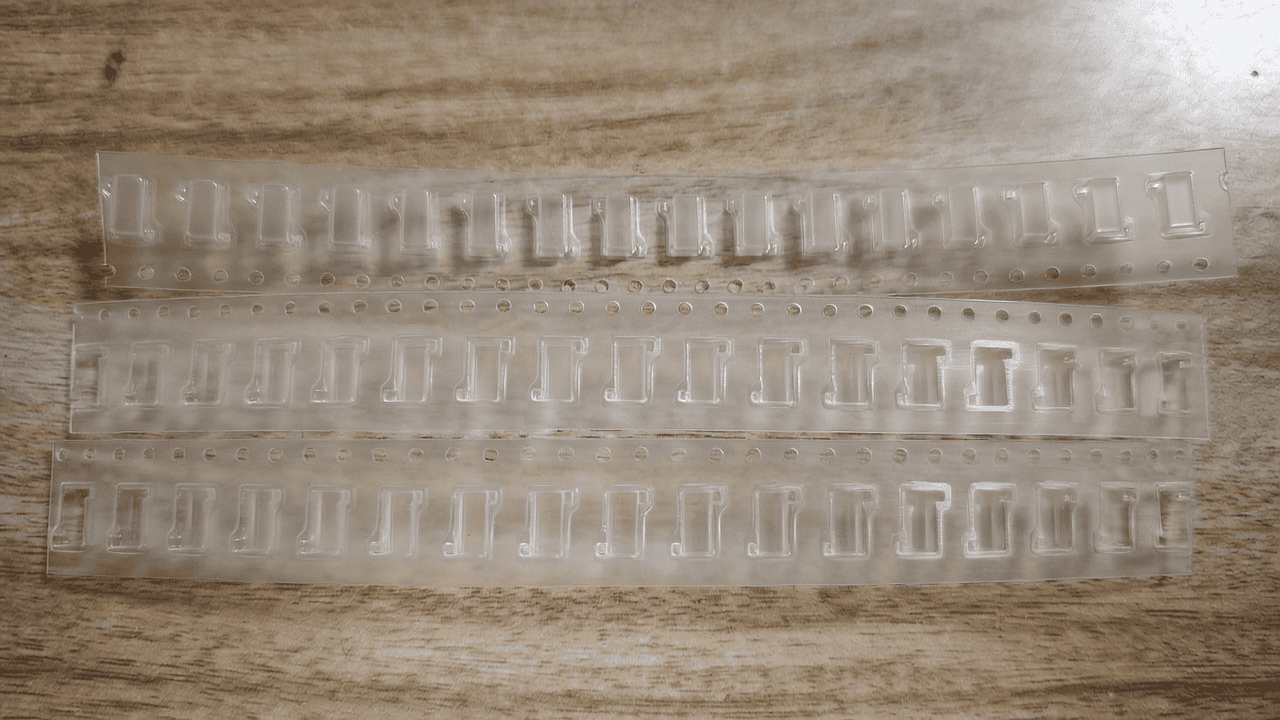
The KR-TDB Series PP transparent dispensing backing film is engineered with a tri-layer structure to balance mechanical strength, adhesion, and release properties. The base layer is a biaxially oriented polypropylene (BOPP) film, selected for its exceptional clarity, low thermal expansion coefficient, and chemical resistance. Unlike PET-based carriers, BOPP exhibits minimal shrinkage under thermal stress, making it ideal for maintaining flatness during heat curing. On top of the base, a proprietary acrylic adhesive layer is precisely coated to provide temporary adhesion to the lead frame or substrate. This adhesive is designed to hold the backing film firmly in place during dispensing and curing, preventing any lift-off or warpage, yet it releases cleanly after the process without leaving sticky residues that could contaminate the cavity. For certain high-temperature applications, the film incorporates a silicone treatment layer on the adhesive side, further enhancing release performance and temperature resistance up to 260°C peak reflow conditions.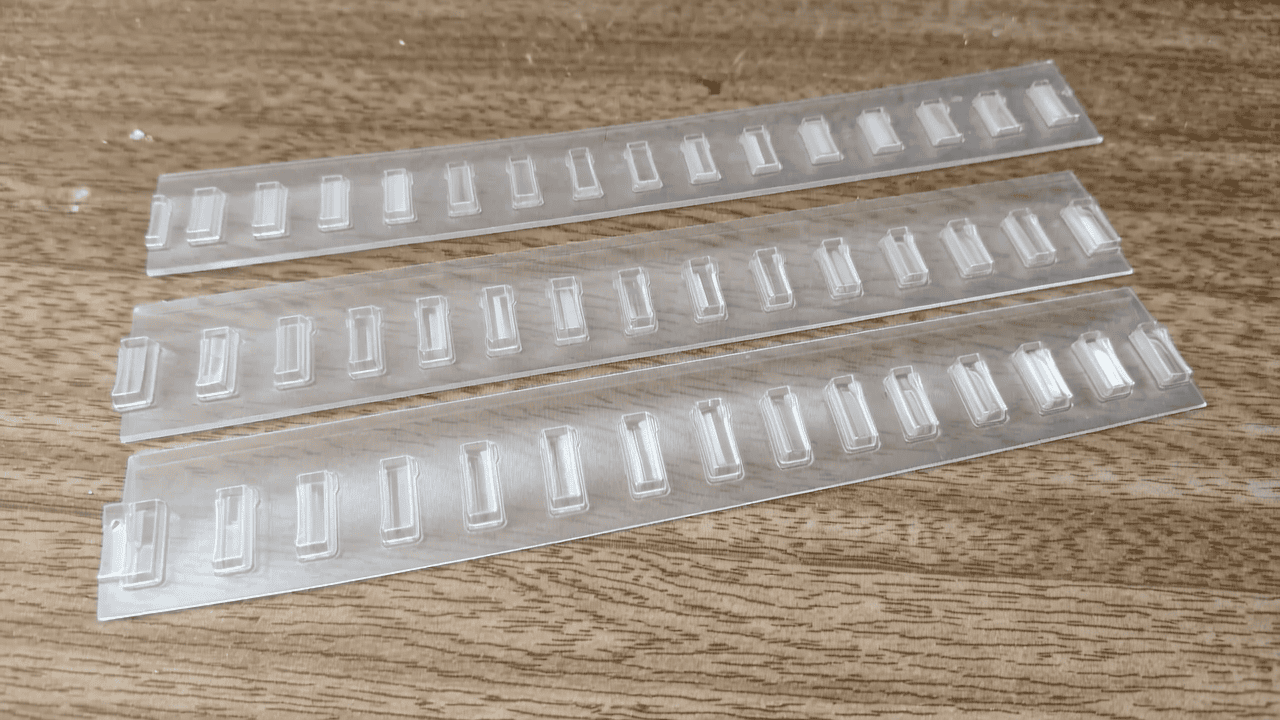
2.2 Key Material Parameters
The performance of the backing film is defined by a set of tightly controlled material parameters. The table below summarizes the typical specifications for two popular grades in the KR-TDB Series.
| Parameter | KR-TDB-100 | KR-TDB-200 |
|---|---|---|
| Total Thickness (µm) | 50 ± 2 | 75 ± 3 |
| Base Film Material | BOPP | BOPP |
| Adhesive Type | Acrylic (low outgassing) | Acrylic with silicone release |
| Peel Strength (g/25mm) | 200–400 | 300–600 |
| Surface Resistivity (Ω/sq) | 107–109 | 107–109 |
| Melting Point of PP (°C) | 160 | 160 |
| Continuous Use Temperature (°C) | −10 to 120 | −10 to 150 |
| Elongation at Break (%) | ≥180 | ≥150 |
| Optical Transmittance (%) | ≥90 | ≥90 |
Both grades feature an antistatic coating to prevent dust attraction and electrostatic discharge (ESD) damage to sensitive inductors. The optical transparency, exceeding 90% transmittance, allows for easy visual alignment and inspection during the dispensing process. The acrylic adhesive is formulated for low outgassing, complying with the strict cleanliness requirements of cleanroom assembly environments.
3. Core Process Parameter Control
3.1 Temperature Control
Temperature is the most influential parameter affecting the flatness performance of the backing film. During dispensing, the cavity is typically heated to reduce epoxy viscosity and improve flow. For KR-TDB-200, the recommended preheat temperature is 80–100°C, while the curing temperature can range from 120°C to 150°C depending on the adhesive chemistry. When using KR-TDB-100, the process window is narrower, with a maximum continuous temperature of 120°C to prevent film relaxation. Without proper control, excessive heat causes the BOPP to soften or shrink, leading to cavity bowing. Kairuie’s films undergo a thermal annealing pretreatment that stabilizes the molecular orientation, minimizing shrinkage to less than 0.5% in both machine and transverse directions at 150°C for 30 minutes. This ensures that the film maintains its flatness throughout the curing cycle, achieving the critical ±0.05 mm tolerance.
3.2 Pressure Settings
Uniform pressure application is essential when laminating the backing film onto the lead frame. Inadequate pressure can allow air entrapment or incomplete adhesion, while excessive pressure may deform the film or cause adhesive bleed-out. For the KR-TDB Series, the optimal lamination pressure is 0.3–0.5 MPa, applied using a rubber roller or a vacuum lamination system. The vacuum lamination method is preferred for high-precision applications because it eliminates air bubbles entirely. A typical process involves drawing a vacuum of ≤100 Pa, then applying 0.4 MPa pressure for 10–15 seconds. This combination ensures intimate contact between the film and the substrate, with less than 5% peel strength variation across a 200 mm × 150 mm panel. The controlled adhesion prevents the film from shifting during dispensing, a key factor in maintaining cavity flatness.
3.3 Time Management
Process timing encompasses three critical stages: lamination dwell, dispensing window, and curing cycle. After lamination, the film must stabilize for at least 5 minutes at room temperature to relax any stress introduced during handling. The dispensing operation should be completed within 30 minutes of lamination to avoid creep of the adhesive under the weight of the liquid epoxy. During curing, the total time at peak temperature must not exceed 60 minutes for KR-TDB-200 to prevent excessive cross-linking of the silicone release layer, which could make demolding difficult. By adhering to these time limits, the backing film maintains consistent release force and flatness, resulting in a defect rate below 50 ppm in high-volume production.
4. Common Issues & Troubleshooting
Even with optimized parameters, occasional issues may arise. The table below lists five typical problems encountered when using PP transparent dispensing backing films, along with their root causes and corrective actions.
| Symptom | Root Cause | Solution |
|---|---|---|
| Cavity flatness > ±0.05 mm after curing | Insufficient lamination pressure or uneven temperature distribution | Re-calibrate press; ensure heat is uniform (±2°C) across platen; verify vacuum level |
| Adhesive residue on inductor cavity | Over-curing or wrong adhesive chemistry for operating temperature | Reduce curing time; switch to KR-TDB-200 for higher thermal stability |
| Film lifts off during dispensing | Inadequate surface preparation or low peel strength | Clean lead frame with isopropyl alcohol; increase pressure; consider KR-TDB-200 with higher adhesion |
| Air bubbles trapped under film | Air entrapment due to fast lamination or poor vacuum | Reduce lamination speed; verify vacuum seal; pre-bake film at 60°C for 10 min to remove moisture |
| Difficulty in releasing film after curing | Excessive peel strength or thermal degradation of release layer | Apply silicone release spray on tooling; verify peak temperature does not exceed 260°C; may need to increase release layer thickness (consult Kairuie for custom) |
All these issues can be mitigated through rigorous process control and proper grade selection. Kairuie’s technical support team provides on-site optimization services to help customers fine-tune their processes.
5. Quality Inspection Standards
5.1 Incoming Quality Control (IQC)
Upon receipt, each batch of KR-TDB backing film undergoes thorough inspection to ensure compliance with specifications. Visual inspection is performed under 1000 lux illumination to check for pinholes, scratches, or contamination. Dimensional checks include total thickness (using a digital micrometer with 0.001 mm resolution) and width tolerance (±0.5 mm). Peel strength is measured per ASTM D3330 at a 180° angle and 300 mm/min speed; values must fall within the specified range. Additionally, surface resistivity is verified with a concentric ring probe to confirm antistatic properties. Batches failing any test are quarantined and returned.
5.2 In-Process Quality Control (IPQC)
During production, sampling plans are critical. For high-volume runs, a random sample of 5 panels per 500 is taken for flatness measurement using a laser profilometer. The tolerance is ±0.05 mm; any panel exceeding this triggers an immediate line stop and parameter review. Peel force is also checked post-lamination at a frequency of 1 per 100 panels. Acceptance criteria include no visual defects and peel force within ±15% of the nominal. Data is logged into a statistical process control (SPC) system to detect trends.
5.3 Reliability Testing
To guarantee long-term performance, the backing film and the bonded assembly undergo rigorous reliability tests. An aging test exposes samples to 85°C and 85% relative humidity for 500 hours, followed by flatness re-measurement; deviation must remain within ±0.05 mm. Thermal cycling from −40°C to +125°C for 1000 cycles simulates extreme environmental stress. Transportation simulation uses a vibration table per ISTA-2A, after which no delamination or flatness degradation is permitted. These tests ensure that the product can withstand the rigors of global supply chains.
6. Selection Guide
Choosing the correct backing film grade depends on the inductor type, cavity depth, curing profile, and production volume. The table below provides a comparison of KR-TDB grades for various application scenarios.