凯瑞尔电子材料
1. Introduction
In the realm of Surface Mount Technology (SMT), cover tape is a seemingly humble yet mission-critical component. It directly determines the integrity of component packaging during automated pick-and-place operations, safeguarding semiconductors, resistors, capacitors, and connectors from contamination, electrostatic discharge, and mechanical damage. The choice between self-adhesive (pressure-sensitive) cover tape and heat-seal cover tape is not trivial—it influences packaging efficiency, sealing reliability, and total cost of ownership.
This article delivers a deep technical comparison of these two dominant cover tape technologies. We will dissect their material construction, analyze critical process parameters, troubleshoot common field issues, and provide a practical selection framework. Throughout, we reference real-world solutions from Kairuie Electronic Materials Co., Ltd., whose product families meet the rigorous demands of modern electronics manufacturing.
2. Product Structure & Material Composition
2.1 Self-Adhesive Cover Tape Construction
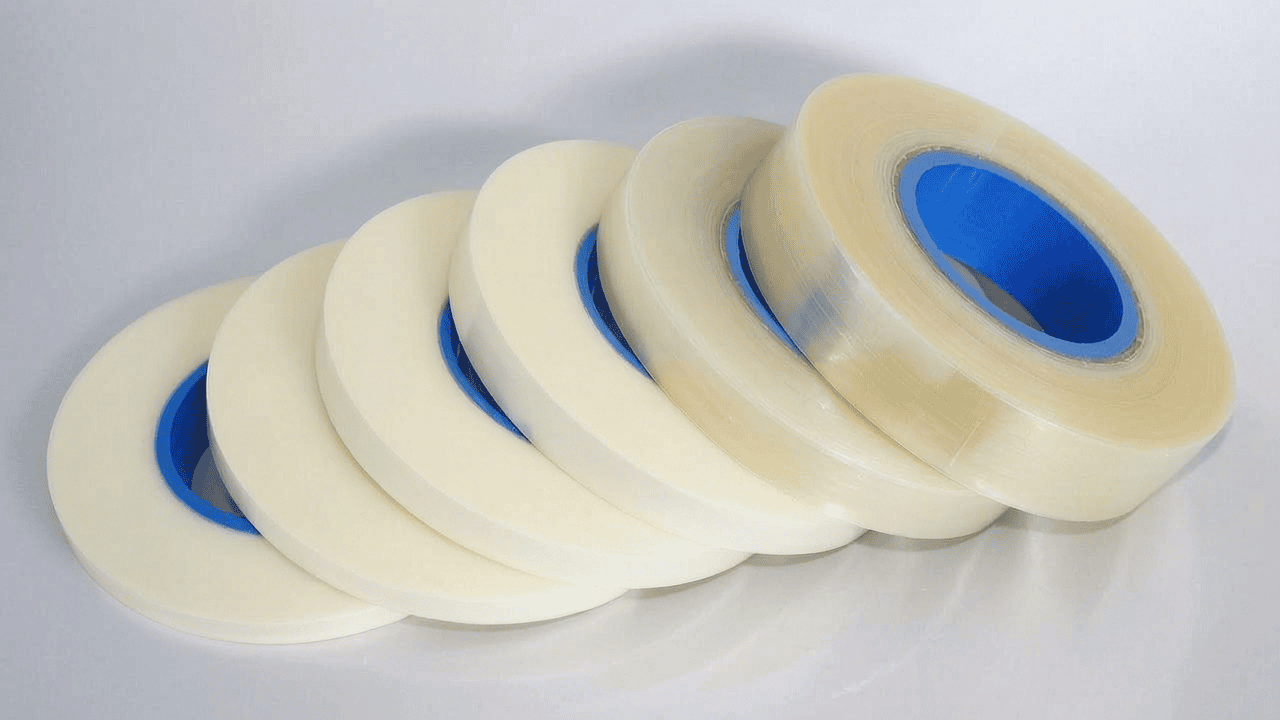
Self-adhesive cover tape typically consists of a multi-layer laminate. The core is a biaxially oriented polyester (BOPET) film, chosen for its excellent tensile strength and dimensional stability. For Kairuie’s KA-series, the base PET thickness ranges from 0.038mm to 0.060mm depending on the pocket depth requirement. A pressure-sensitive adhesive (PSA) layer is precisely coated on one side, often a modified acrylic system that provides immediate tack to the carrier tape at room temperature with minimal pressure. A critical feature of Kairuie’s KA-2000 model is its cross-linked acrylic adhesive, which exhibits a peel strength of 40-80 gf/inch (tested per EIA-481) while leaving virtually no residue. The top side may incorporate an anti-static coating or a conductive grid pattern to achieve the desired surface resistivity. For example, KA-2000AS offers a dissipative surface resistivity of 106 to 108 ohms/square, compliant with ANSI/ESD S20.20.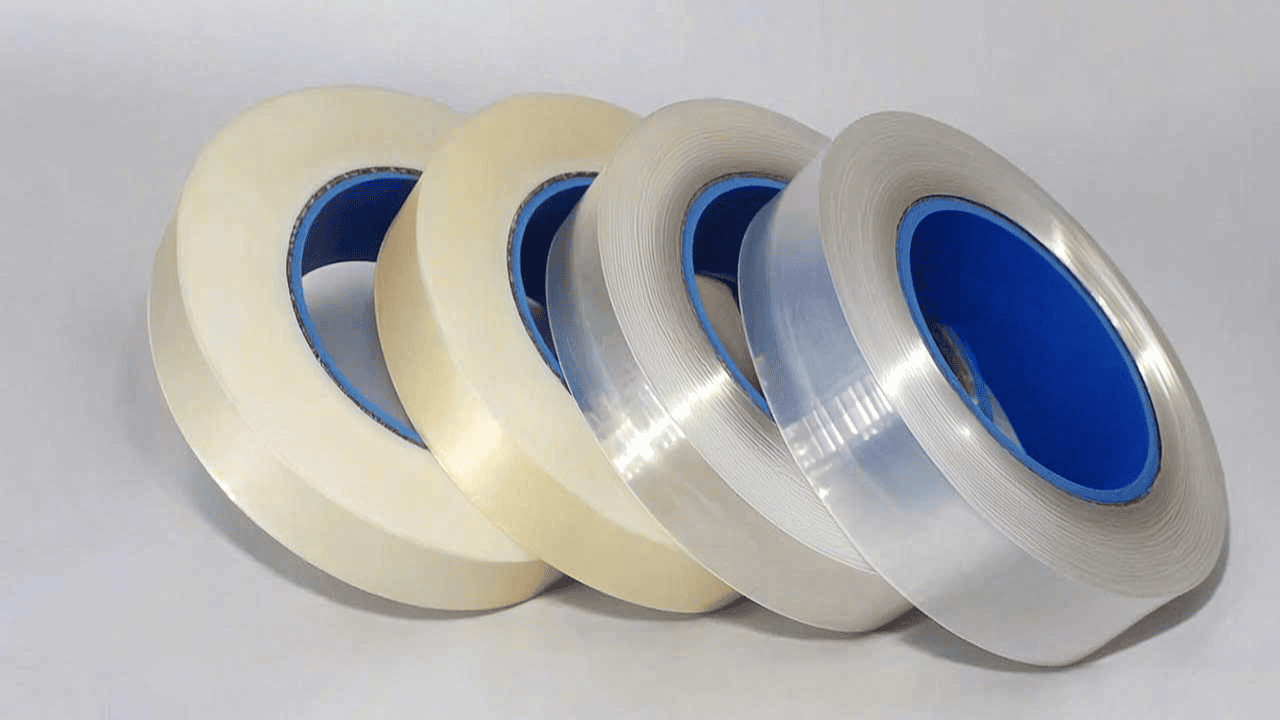
2.2 Heat-Seal Cover Tape Construction
Heat-seal cover tape uses a BOPET base film, often with a heat-activated adhesive layer. Kairuie’s KH-series employs a sophisticated co-extruded structure: a transparent or hazy PET base (0.048mm typical), a tie layer, and a proprietary thermoplastic sealant layer. The sealant is a blend of EVA (ethylene-vinyl acetate) and special elastomers that melts at a very specific temperature window, typically 140°C to 180°C, to form a strong bond with the carrier tape’s surface (usually polycarbonate or polystyrene). Model KH-180E features a sealant optimized for polycarbonate carrier tapes, delivering a seal strength of 600-900 gf/inch after bonding. Surface resistivity is controlled via a buried conductive layer; KH-180E-SD provides a static-dissipative path with 105 to 107 ohms/sq, preventing triboelectric charging during peel-off.