凯瑞尔电子材料
1. Introduction
In surface-mount technology (SMT), the integrity of component packaging directly impacts pick-and-place accuracy, production yield, and overall reliability. Among the critical packaging elements, cover tape serves as the barrier that secures components within carrier tape pockets from reeling through soldering. A seemingly minor choice between self-adhesive (pressure-sensitive) and heat-seal (heat-activated) cover tape can lead to a two-fold difference in material cost—a gap that perplexes many procurement and process engineers. This article delves into the technical underpinnings of both cover tape types, analyzing their material composition, process control requirements, failure modes, quality benchmarks, and application-specific selection criteria. By referencing Kairuie Electronic Materials Co., Ltd.’s product lines—such as the CT-PS self-adhesive series and CT-HA heat-seal series—we will clarify why heat-seal cover tape commands a premium and where each solution delivers optimal value.
2. Product Structure & Material Composition
2.1 Layer Architecture of Cover Tape
Cover tape is a multi-layer composite designed to balance peel performance, static dissipation, and barrier properties. A typical construction includes:
- Base Film: Biaxially oriented polyethylene terephthalate (BOPET) providing mechanical strength and dimensional stability. Common thicknesses range from 45 to 62 μm, with Kairuie’s CT-HA series using 48 μm PET for enhanced stiffness, while CT-PS adopts a 50 μm film to support pressure-sensitive adhesive coating.
- Adhesive Layer: The functional layer dictating sealing mechanism. Self-adhesive tapes employ a pre-applied pressure-sensitive adhesive (PSA)—often acrylic or rubber-based—that bonds instantly at room temperature under mechanical pressure. In contrast, heat-seal tapes rely on a heat-activated adhesive (HAA) layer, typically a copolymer blend (e.g., EVA or PE/acrylate) that remains inert until exposed to 160–200°C, when it melts and flows to create a molecular bond with the carrier tape surface.
- Functional Coatings (Optional): Anti-static treatments, generally applied as a conductive polymer coating or metallic sputtering on one or both surfaces, achieving surface resistivity between 104 and 1010 Ω/sq. Kairuie’s specialty ESD control models (e.g., CT-HA-ESD) maintain < 108 Ω/sq on the inner side to prevent electrostatic discharge damage to sensitive components.
The fundamental difference in adhesive chemistry is the primary driver of cost divergence. HAA materials require precise viscoelastic tailoring to activate uniformly within a narrow temperature window, adding R&D and raw material expenses. Furthermore, the coating and drying processes for HAA are more energy-intensive and slower than PSA coating, reducing production throughput.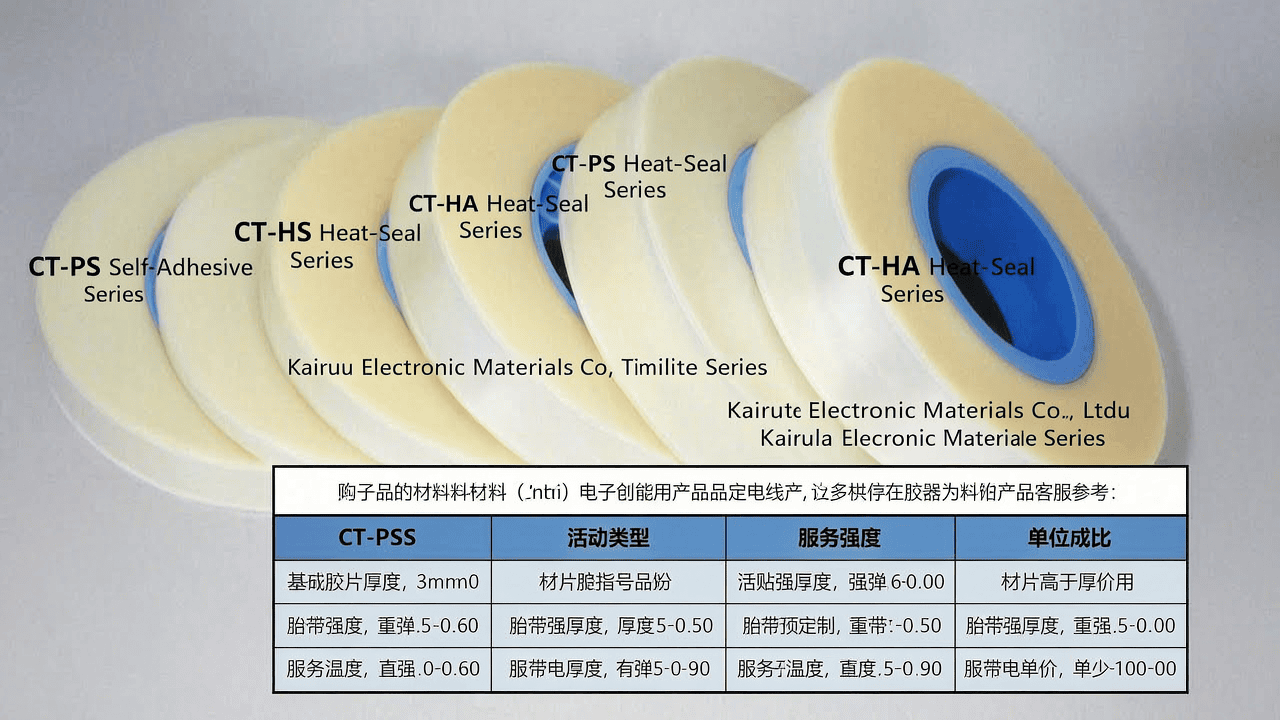
2.2 Key Material Parameters & Product Benchmarks
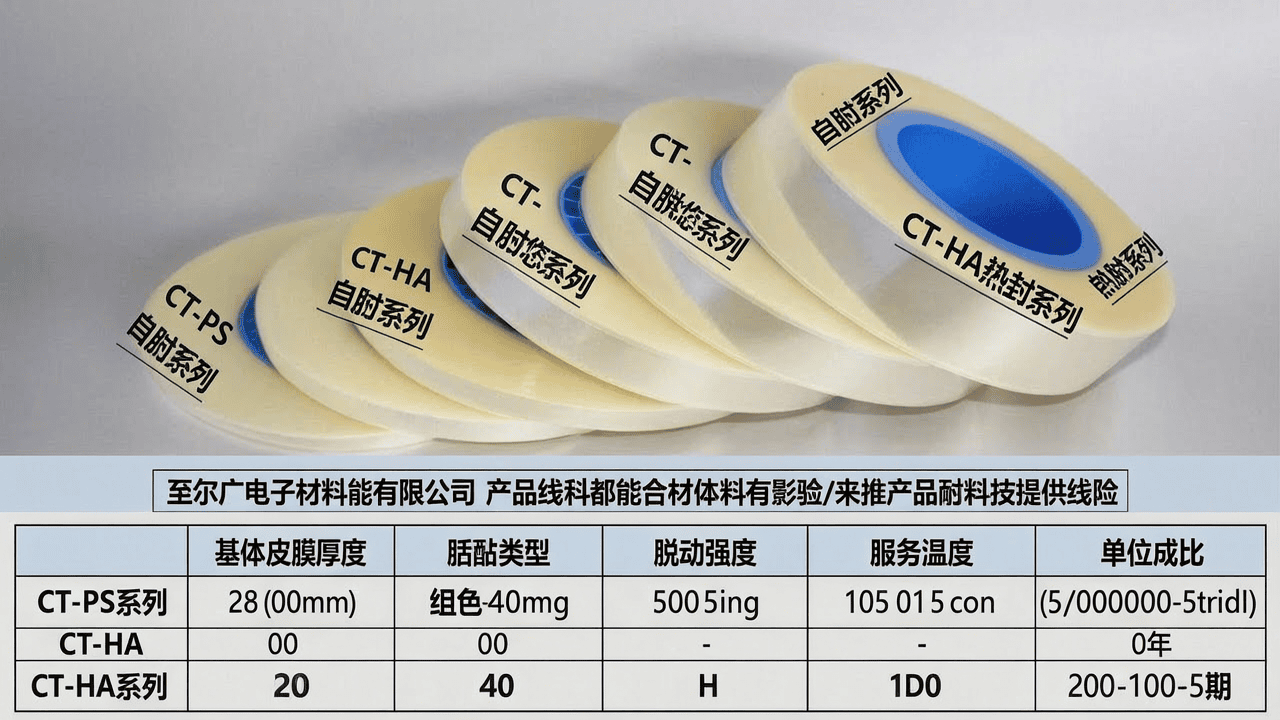
Table 1 compares typical specifications of Kairuie’s self-adhesive and heat-seal cover tape series.
| Parameter | CT-PS (Self-Adhesive) | CT-HA (Heat-Seal) |
|---|---|---|
| Base Film Thickness (μm) | 50 ± 2 | 48 ± 2 |
| Adhesive Type | Acrylic PSA | Heat-activated copolymer (EVA-based) |
| Surface Resistivity (Ω/sq) | 106 – 109 | 104 – 108 |
| Peel Strength to PS Carrier (g/25mm) | 20 – 60 (at room temp) | 30 – 80 (after heat sealing) |
| Service Temperature (°C) | -40 to +85 | -40 to +125 |
| Shelf Life (months) | 24 (unopened) | 24 (unopened) |
| Unit Cost Relative | 1x (baseline) | ~2x |
The table reveals that heat-seal tape offers a broader operational temperature window and adjustable peel strength through process tuning, justifying its higher cost for demanding applications.
3. Core Process Parameter Control
3.1 Recommended Process Windows
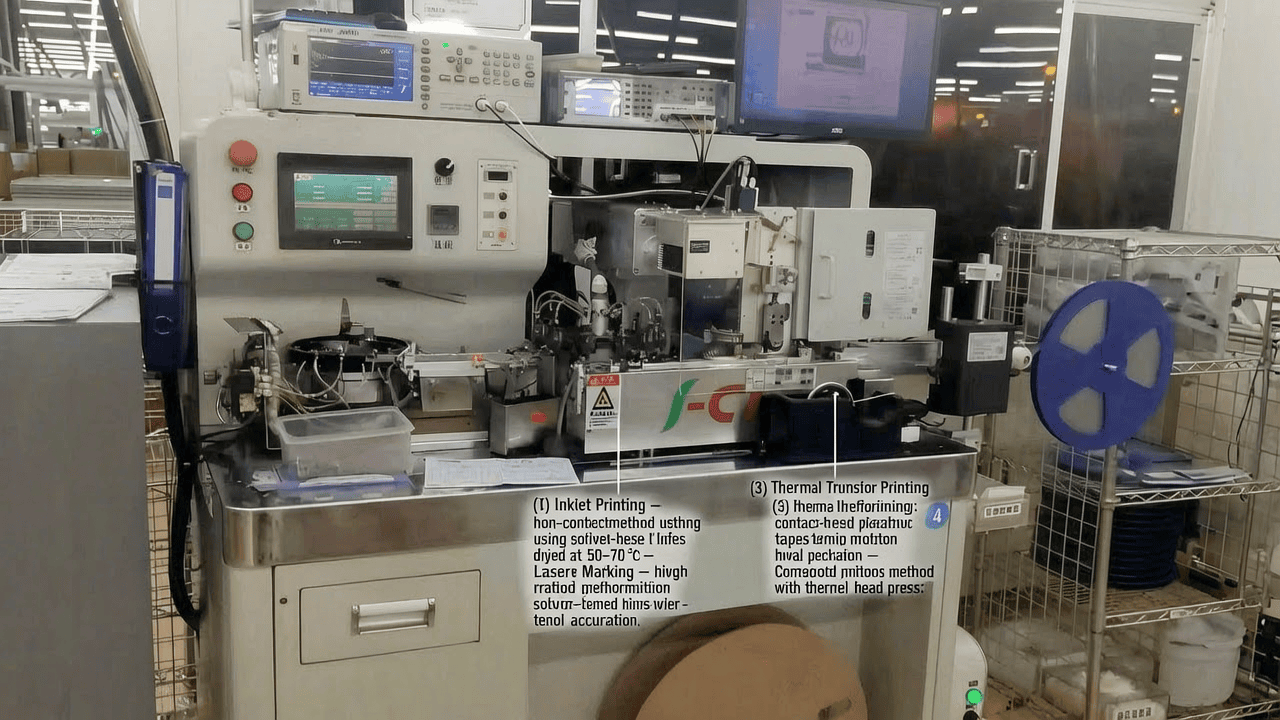
Effective sealing depends on precise control of temperature, pressure, and dwell time. Table 2 outlines the recommended ranges for both tape types on standard SMT taping equipment (e.g., Kairuie KM-48L series).
| Parameter | Self-Adhesive (CT-PS) | Heat-Seal (CT-HA) |
|---|---|---|
| Sealing Temperature (°C) | Ambient (20–30) | 170–190 (typical), max 210 |
| Sealing Pressure (Bar) | 2.0 – 3.5 | 3.0 – 4.5 |
| Dwell Time (Seconds) | 0.3 – 0.8 | 0.5 – 1.2 |
| Cool Time (Seconds) | None required | 0.2 – 0.5 (forced air cooling) |
3.2 Influence of Parameters on Quality
For self-adhesive tape, pressure and roll surface flatness dominate. Excessive pressure may cause adhesive ooze into carrier tape pockets, contaminating components; insufficient pressure results in low peel force and potential tape lift during transport. Temperature is non-critical, though extreme cold may reduce PSA tack.
For heat-seal tape, temperature uniformity across the sealing head is paramount. Variations as small as ±5°C can shift peel strength by 10–15 g/25mm. If temperature is too low, the adhesive does not fully wet the carrier surface, yielding weak bonds. Overheating leads to charring, adhesive degradation, and even PET base film distortion. Dwell time must be synchronized with heat transfer: shorter than 0.3 seconds may prevent adequate melt flow, while over 1.5 seconds may burn the adhesive on high-speed lines. Post-seal cooling solidifies the joint and stabilizes peel characteristics.
3.3 Process Window Optimization
A Design of Experiments (DoE) approach is recommended to lock the optimal setpoint. For CT-HA series, starting at 180°C, 4.0 bar, and 0.7 s dwell, perform peel tests across 10-sample groups while deliberately introducing small offsets. The aim is a peel strength of 40–60 g (high enough for rugged handling, yet within 80 g maximum to avoid pick-and-place jamming). Kairuie’s taping machine retrofit kits allow ±1°C resolution temperature control and digital pressure feedback, enabling tight process control.
4. Common Issues & Troubleshooting
Table 3 lists the most frequent field problems and their root-cause solutions for both cover tape types.
| Tape Type | Symptom | Root Cause | Solution |
|---|---|---|---|
| Self-Adhesive | Peel force too low (< 15 g) | Contaminated carrier tape surface; insufficient pressure | Clean carrier web path; increase roller pressure to 3.5 bar; verify PSA coating uniformity |
| Self-Adhesive | Adhesive residue on carrier edges | Aged tape or excessive storage temperature | Replace old stock; store below 30°C; switch to CT-PS-FR (low-residue formulation) |
| Heat-Seal | Inconsistent peel force along reel | Temperature drift in sealing zone; worn heater element | Install thermocouple feedback control; replace heater cartridge; verify power supply stability |
| Heat-Seal | Blisters or bubbles under tape | Moisture absorption in carrier or adhesive; too rapid heating | Pre-dry carrier tape (4 h at 60°C); reduce temperature ramp rate; use Kairuie low-moisture CT-HA-LM grade |
| Both Types | Longitudinal camber (>1 mm/m) | Uneven tension during slitting or storage | Check slitter blade sharpness; rewind under constant torque; store reels vertically |
Regular process audits and peel-force SPC charts help preempt these issues, especially when transitioning between product series.
5. Quality Inspection Standards
5.1 Incoming Quality Control (IQC)
Each lot of cover tape must undergo rigorous inspection:
- Visual Inspection: Under 30x magnification, the adhesive surface must be free of pinholes, gels, or foreign particles. Tape edges must be cleanly slit without nicks.
- Dimensional Check: Width tolerance ±0.1 mm; core ID 76.2 mm (+0.2/-0); overall thickness ±5% from nominal. Kairuie’s laser micrometer system ensures batch consistency.
- Peel Strength Conformity: Using a dedicated peel tester at 300 mm/min speed, 10 specimens per lot must fall within the specified range.
- Surface Resistivity: Measured per ASTM D257, verifying anti-static properties on both sides.
5.2 In-Process Quality Control (IPQC)
During taping machine operation:
- Sampling frequency: Extract 3 consecutive sealed pockets every 5000 placements.
- Acceptance criteria: Peel force within ±10% of baseline; no component migration; cover tape centered on carrier with overhang < 0.2 mm.
- Seal temperature recorded continuously via data logger; any deviation > ±3°C triggers alarm.
5.3 Reliability Testing
Kairuie performs qualification tests simulating the full logistics cycle:
- Thermal Aging: 1000 hours at 70°C (self-adhesive) or 125°C (heat-seal), followed by peel test; variation < 20% allowable.
- Thermal Cycling: -40°C ↔ +85°C, 500 cycles; no delamination or cracking.
- Transportation Simulation: Random vibration per ISTA 1A, followed by drop tests; peel force must remain within specification.
6. Selection Guide
Choosing between self-adhesive and heat-seal cover tapes hinges on component sensitivity, production environment, and total cost of ownership. Table 4 provides a decision matrix based on common SMT scenarios.
| Application Scenario | Recommended Cover Tape | Reasoning |
|---|---|---|
| Passive components (0402 to 1206) | Self-Adhesive (CT-PS) | Low cost, high-speed taping with simple pressure activation; adequate protection |
| Sensitive ICs (QFN, BGA) with moisture sensitivity | Heat-Seal (CT-HA-ESD) | Hermetic seal achievable with controlled peel; ESD protection; temperature resilience for pre-conditioning |
| Automotive-grade components (-40°C to +125°C) | Heat-Seal (CT-HA-HC) | Sustains high-temp exposure without adhesive softening; reliable peel stability over temperature cycling |
| High-speed automated lines (>50,000 pcs/h) | Self-Adhesive (CT-PS-FT) | Instant bonding eliminates dwell time bottlenecks; fast-flow PSA formulation |
| Double-sided reflow processes | Heat-Seal (CT-HA-2S) | Maintains seal integrity during top/bottom reflow where tape experiences dual thermal excursions |
For mixed-production environments, Kairuie’s dual-mode taping machines allow seamless switching between tape types with minimal downtime, providing flexibility without sacrificing efficiency.
7. Conclusion
The 100% price premium of heat-seal cover tape over self-adhesive tape is not arbitrary but grounded in enhanced material engineering, tighter process control, and superior performance under stress. Self-adhesive tape, with its room-temperature bonding and lower cost, excels in high-volume, non-critical applications. Heat-seal tape, with its tunable peel strength, thermal stability, and hermetic sealing capability, is irreplaceable for advanced semiconductor and automotive electronics packaging. By matching tape selection to the real operational demands—and leveraging equipment such as Kairuie’s customizable taping solutions—manufacturers can minimize total cost while maximizing yield. Kairuie Electronic Materials Co., Ltd. continues to refine both product lines, offering series like CT-PS and CT-HA with tailored ESD protection, low-residue variants, and machine integration support. For deeper technical discussion or sample evaluation, visit www.kairuie.com. We welcome collaborative exchange with industry peers to advance SMT packaging reliability together.