凯瑞尔电子材料
1. Introduction
In the rapidly evolving world of surface mount technology (SMT), the reliability of electronic packaging materials is paramount. Among these, carrier tapes play a critical role in protecting, transporting, and precisely presenting components for automated pick-and-place assembly. A single defect in a carrier tape can lead to costly production downtime, component damage, or even field failures. Kairuie Electronic Materials Co., Ltd. has set a new industry benchmark by achieving an annual record of zero customer complaints while maintaining a bold 100% yield rate. This article explores the technical foundations behind this achievement, delving into the material science, process control, quality assurance, and application-specific engineering that enable Kairuie’s SMT carrier tapes to deliver uncompromising performance. We will examine the structural composition of these tapes, the precise control of sealing parameters, common troubleshooting strategies, rigorous inspection protocols, and practical selection guidance for various component types.
2. Product Structure & Material Composition
Layer Structure Explanation
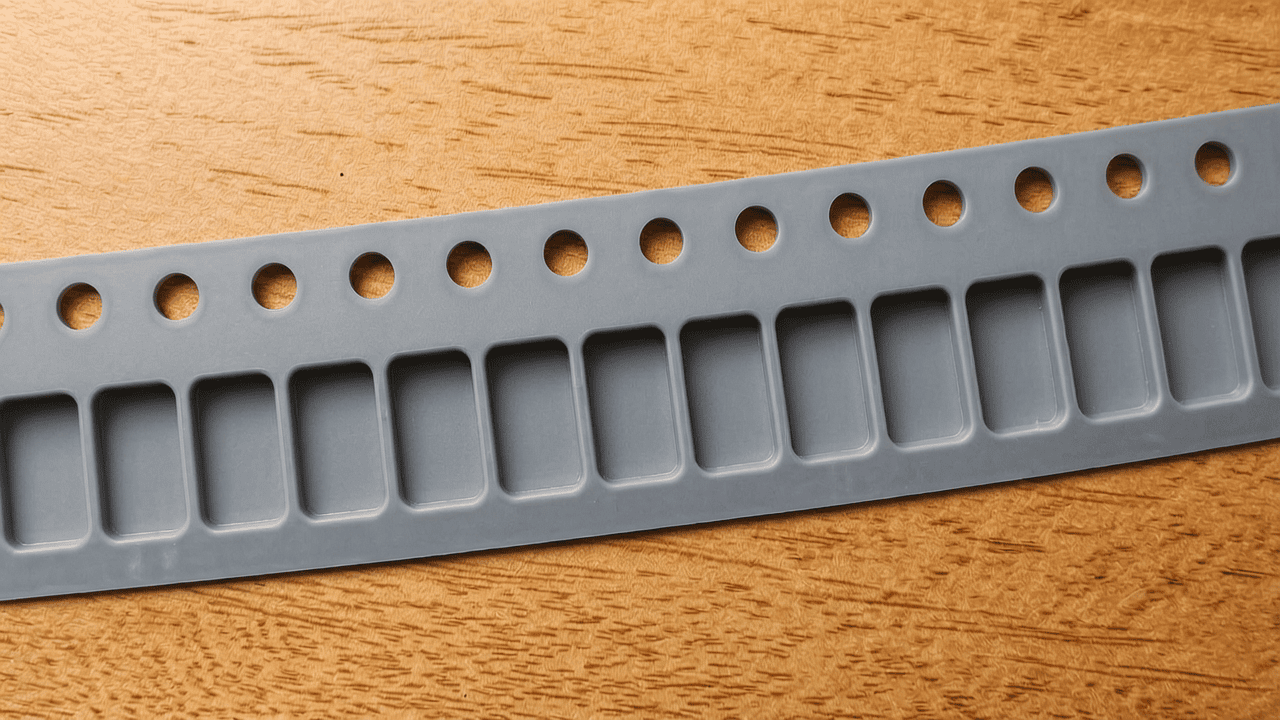
Kairuie’s carrier tapes are engineered with a multi-layer construction designed to balance mechanical strength, dimensional stability, and electrical safety. The foundational layer is a specially formulated polyethylene terephthalate (PET) film, selected for its high tensile modulus and thermal resistance. This is combined with a precisely applied adhesive layer that ensures consistent peel strength without adhesive transfer to components. For anti-static applications, a conductive coating or a static-dissipative treatment is integrated into the structure. For example, the KR-CS04 series incorporates a buried conductive layer to achieve surface resistivity between 106 and 109 ohm/sq, preventing electrostatic discharge (ESD) damage. The top layer may include a release coating to facilitate smooth component release during placement. This layered architecture is manufactured under Class 1,000 cleanroom conditions to eliminate particulate contamination.
Key Material Parameters
Kairuie offers a range of standard and custom carrier tapes, each with defined specifications. The table below summarizes key parameters for popular models: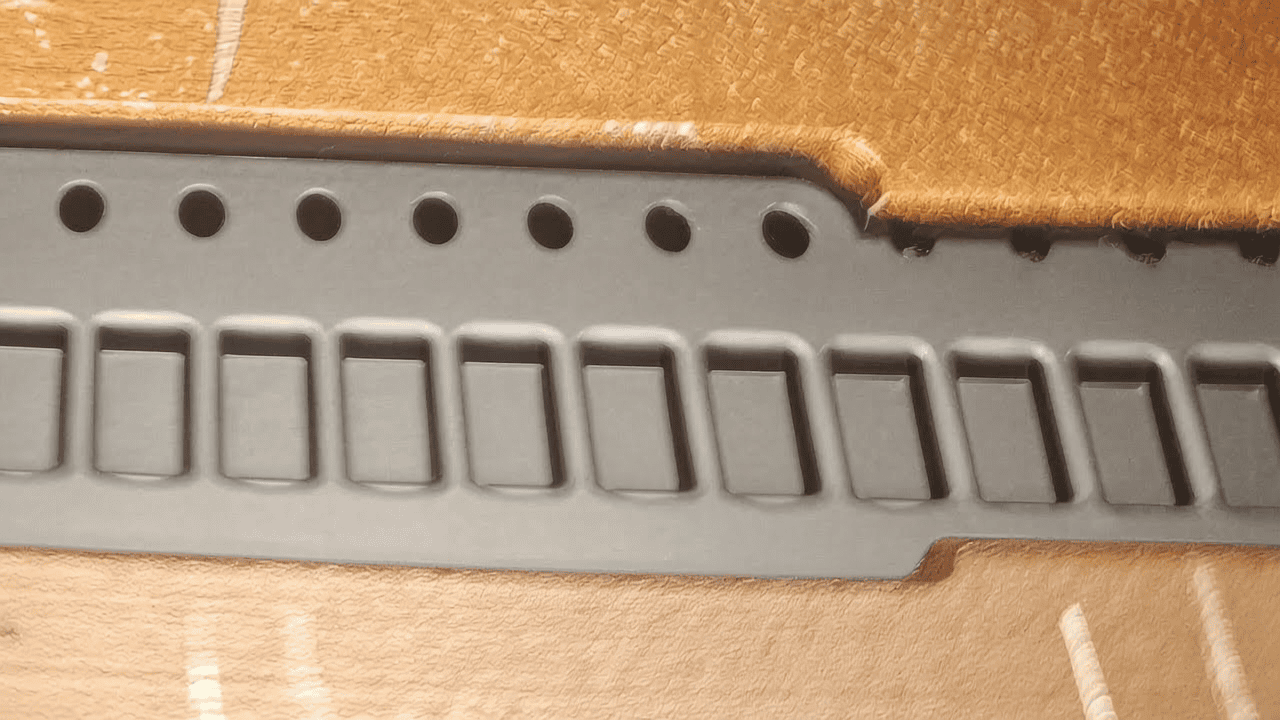
| Model | Width (mm) | PET Thickness (mm) | Adhesive Type | Surface Resistivity (ohm/sq) | Peel Strength (N/cm) | Pocket Depth (mm) |
|---|---|---|---|---|---|---|
| KR-CS04 | 8 | 0.3 | Silicone | 106–108 | 0.45–0.65 | 0.8–1.2 |
| KR-CS08 | 12 | 0.4 | Acrylic | 108–1011 (insulative) | 0.50–0.70 | 1.5–2.5 |
| KR-CS12 | 16 | 0.5 | Silicone | 105–107 | 0.50–0.75 | 2.0–3.5 |
| KR-CS24 | 24 | 0.5 | Acrylic | 109–1012 (static dissipative) | 0.55–0.80 | 3.0–5.0 |
These parameters are tailored to meet JEDEC, EIA, and customer-specific requirements. The adhesive formulations are cured to optimize bonding to PET while ensuring residue-free removal during the pick-and-place cycle. Dimensional tolerances are held to ±0.1 mm on pocket pitch and depth, ensuring flawless feeding in high-speed placement equipment.
3. Core Process Parameter Control
Recommended Ranges for Temperature, Pressure, and Time
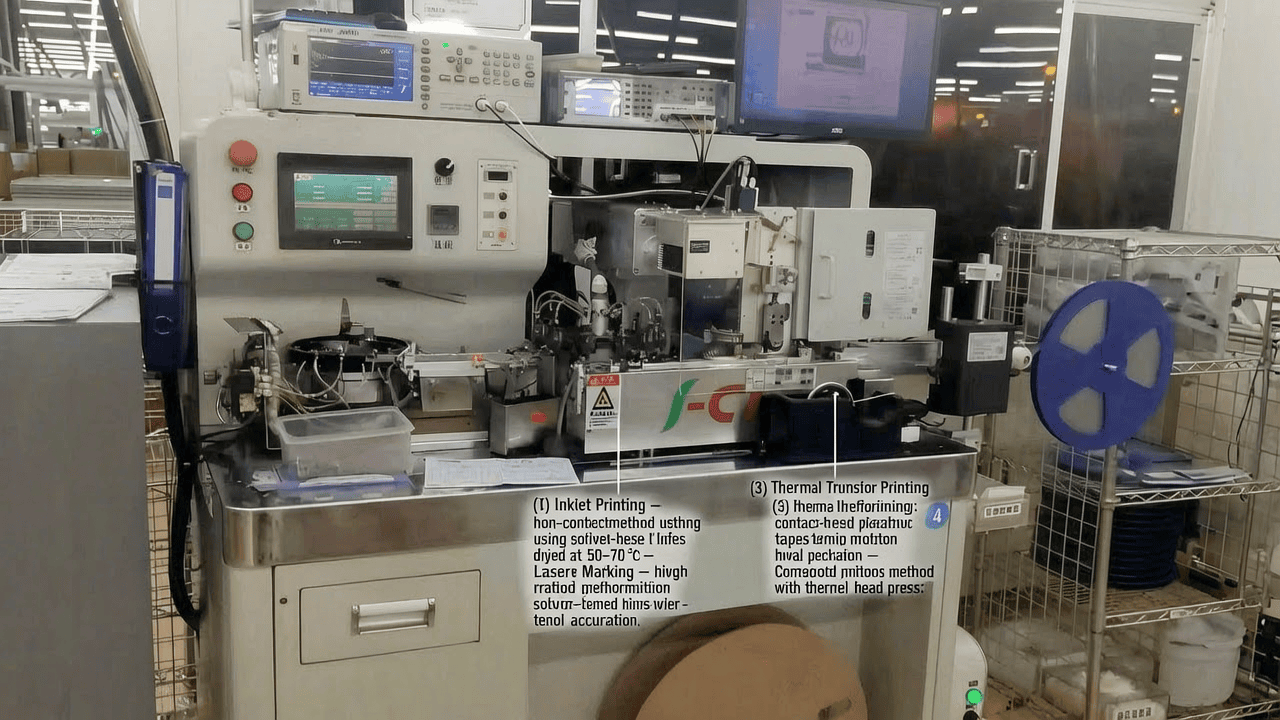
The sealing process for carrier tapes is critical; improper settings can cause weak seals, component damage, or tape deformation. Kairuie’s extensive process validation has yielded optimal sealing windows for each tape series. For silicone-based adhesives (KR-CS04, KR-CS12), the recommended sealing temperature is 140–160°C, with pressure of 0.3–0.4 MPa and dwell time of 0.8–1.2 seconds. For acrylic-based tapes (KR-CS08, KR-CS24), the temperature range is 120–140°C, pressure 0.25–0.35 MPa, and time 0.5–1.0 second. These parameters ensure a peel strength consistently within 0.5–0.7 N/cm, as measured per ASTM D3330.
How Each Parameter Affects Product Quality
Temperature directly influences the adhesive’s flow and bonding efficiency. Too low a temperature results in insufficient wetting and weak seals, risking component fallout during handling. Excessive temperature can cause PET film shrinkage or distortion, altering pocket dimensions and causing placement misalignment. Pressure ensures uniform contact between the cover tape and carrier tape. Low pressure leads to intermittent bonding, while overpressure may crush the carrier tape or extrude adhesive into the pocket, contaminating components. Dwell time must be precise; too short a time yields incomplete bonding, and too long may degrade the adhesive or cause heat buildup, affecting subsequent peel characteristics. Kairuie’s process engineers have mapped these interactions to define robust process windows.
Process Window Optimization Suggestions
To maintain zero-defect output, Kairuie recommends continuous monitoring using IR thermography and real-time peel force measurement on the production line. A Design of Experiments (DOE) approach is employed during initial setup to account for ambient humidity and tape lot variations. For high-speed lines, a slight increase in temperature and a decrease in dwell time can be compensated by a proportional increase in pressure, provided the upper pressure limit (0.5 MPa) is not exceeded. All adjustments are validated through 48-hour aging tests to confirm long-term adhesion stability. These proactive controls eliminate the root causes of sealing-related customer complaints.
4. Common Issues & Troubleshooting
Despite stringent controls, operators may encounter occasional anomalies. The table below addresses five typical problems, their root causes, and the corrective actions recommended by Kairuie’s technical support team.
| Symptom | Root Cause | Solution |
|---|---|---|
| Inconsistent peel strength (too high or too low) | Variation in sealing temperature or pressure; adhesive lot inconsistency | Verify and calibrate sealing equipment; check adhesive batch; adjust parameters within window |
| Cover tape lifting at edges | Uneven pressure distribution; misaligned sealing head | Inspect and realign the sealing bar; ensure uniform pressure; replace worn components |
| Component sticking to cover tape | Excessive adhesive flow or static charge | Reduce sealing temperature/pressure; use anti-static cover tape; increase ionization |
| Pocket deformation during sealing | Overheating; excessive pressure; PET grade insufficient | Lower temperature; reduce pressure; switch to higher Tg PET material |
| ESD damage to components | Carrier tape surface resistivity out of spec | Measure resistivity; replace with correct ESD-safe tape; confirm grounding of equipment |
Kairuie’s zero-complaint record is supported by a rapid response team that uses these standardized troubleshooting steps to resolve issues often before the customer notices them. Continuous feedback loops update the control plans to prevent recurrence.
5. Quality Inspection Standards
Incoming Quality Control (IQC)
All raw materials, including PET film, adhesives, and release liners, undergo rigorous inspection upon receipt. Visual inspection checks for foreign particles, wrinkles, and uniformity under 20x magnification. Dimensions such as width and thickness are verified with laser micrometers to ±0.01 mm accuracy. Peel strength is tested on witness coupons using a universal tensile tester, with acceptance criteria of 0.5–0.8 N/cm depending on the product code. Surface resistivity is measured per ASTM D257, and any lot outside the specified range is rejected. This front-end scrutiny ensures that only certified materials enter production.
In-Process Quality Control (IPQC)
During tape manufacturing and conversion, IPQC is performed at a sampling frequency of one sample per reel for dimensional checks and one per lot for peel and resistivity tests. Pocket dimensions (length, width, depth) are gauged with a coordinate measuring machine (CMM) to a tolerance of ±0.05 mm. Splice integrity is verified every 500 meters. Statistical process control (SPC) charts track key parameters, and any out-of-control signal triggers immediate containment. Kairuie’s IPQC protocol exceeds IPC/JEDEC J-STD-033 requirements, contributing to the near-perfect yield.
Reliability Testing
Finished carrier tapes are subject to accelerated aging at 60°C/90% RH for 168 hours to simulate long-term storage, with peel strength retention >90% required. High/low temperature cycling from -40°C to +85°C (100 cycles) confirms dimensional stability and seal integrity. Transportation simulation using vibration and drop tests per ASTM D4169 ensures the tape can withstand logistics without component displacement. These reliability tests are conducted on every new lot or when process changes occur, providing the data behind Kairuie’s 100% quality commitment.
6. Selection Guide
Choosing the right carrier tape depends on component size, weight, ESD sensitivity, and placement equipment. Kairuie provides customized solutions for a wide range of SMT applications. The following table offers a quick selection matrix.
| Application Scenario | Component Type Examples | Recommended Series | Key Features |
|---|---|---|---|
| Small passive (0201–0603) | Resistors, capacitors | KR-CS04 | Ultra-thin 0.3 mm PET, precise pockets, anti-static |
| Medium IC (SOIC, QFP) | Microcontrollers, drivers | KR-CS08 | Standard 12 mm width, optimized peel, clear cover |
| Heavy connectors | Board-to-board, USB connectors | KR-CS12 | Thicker PET, high peel strength, impact-resistant |
| ESD-sensitive devices | MOSFETs, laser diodes | KR-CS08-ESD | Surface resistivity 106–108 ohm/sq, black conductive |
| Tall components (inductors, transformers) | Power inductors, RF coils | KR-CS24 | Deep pockets, extra-wide, secure seating |
For unique requirements, Kairuie’s R&D team can design custom pocket geometries, specialty materials (e.g., high-temperature polyimide), and advanced treatments (e.g., silicone-free options for sensitive optics). By aligning tape characteristics with the application, customers achieve maximum placement efficiency and reliability.
7. Conclusion
Kairuie Electronic Materials Co., Ltd. has proven that a relentless focus on material science, precision manufacturing, and rigorous quality control can eliminate customer complaints and yield rates can truly reach 100%. From the engineered PET layers to the data-driven sealing processes, every aspect of our SMT carrier tapes is designed to protect your valuable components and keep your production lines running flawlessly. Whether you are packaging microchips or massive connectors, Kairuie’s KR series provides a reliable, cost-effective solution backed by certification according to ISO 9001, ISO 14001, and IATF 16949. Our technical support team stands ready to assist with application trials and process optimization. We invite industry peers and partners to explore how Kairuie’s zero-defect culture can benefit your operations. Visit us at www.kairuie.com to learn more about our full range of SMT packaging materials and join the conversation on advancing electronics manufacturing quality.