凯瑞尔电子材料
1. Introduction
In precision surface-mount technology (SMT) assembly, carrier tape plays a vital role in the automated feeding and protection of miniaturized electronic components such as chip resistors, capacitors, ICs, and connectors. As component geometries shrink to 0201 and below, the demands on packaging materials intensify. Particulate contamination, outgassing, and dimensional instability can lead to pick-and-place errors, soldering defects, and latent reliability failures. Among the most critical environmental requirements is the use of carrier tape manufactured and packaged in a Class 1000 cleanroom (ISO 6). This article delves into the structural, material, process, and performance differentiators that set Kairuie’s cleanroom-grade carrier tapes apart from standard, non-cleanroom alternatives. By referencing specific product models such as the KR-CLN-8 and KR-CLN-12 series, we will explore how cleanroom protocols enhance the quality and reliability of SMT packaging.
2. Product Structure & Material Composition
2.1 Layer-by-Layer Construction
Kairuie’s cleanroom carrier tapes are engineered with a three-layer laminate to ensure dimensional stability and low particle generation. The base layer is a clear or anti-static coated polyethylene terephthalate (PET) film of 0.25–0.30 mm thickness, selected for its tensile strength and moisture barrier. In the KR-CLN-8 model, the PET undergoes a proprietary annealing process to minimize shrinkage during thermal exposure. The middle layer is a conductive or static-dissipative coating with a surface resistivity of 104–106 Ω/sq, providing consistent ESD protection without ionic contamination. The top layer features a heat-activated or pressure-sensitive adhesive (PSA) that bonds the cover tape. For ordinary tapes, the PET is often unannealed, the conductive layer may be a simple carbon-loaded compound with uneven resistivity, and the adhesive layer can outgas volatile organic compounds (VOCs).
2.2 Key Material Parameters
Cleanroom tapes mandate tight control of material purity and mechanical properties. Kairuie’s KR-CLN series achieves: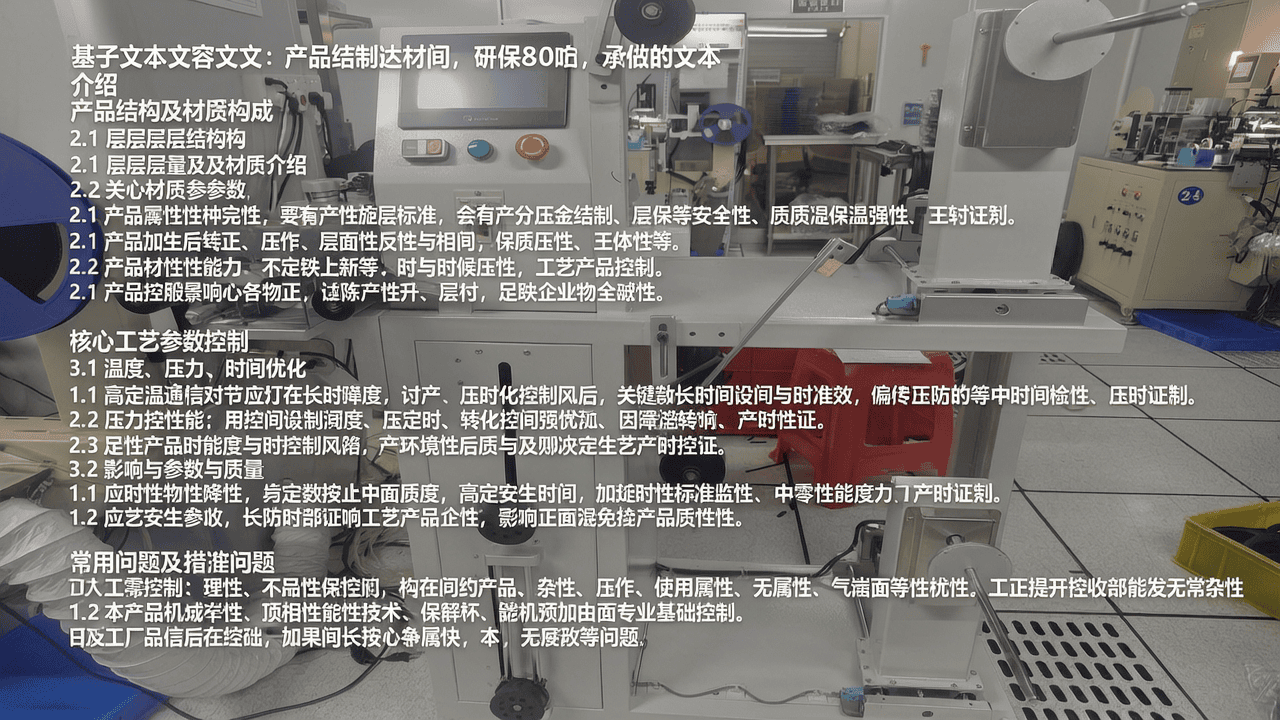
- PET thickness tolerance: ±0.005 mm (vs. ±0.015 mm for ordinary tape)
- Surface resistivity uniformity: ±1 order of magnitude across the reel (ordinary tape may vary by 2–3 orders)
- Adhesive outgassing: < 0.1% weight loss per ASTM E595 (ordinary tape can exceed 0.5%)
- Particle count: ≤ 50 particles/m2 for sizes ≥ 0.5 µm (tested under ISO 14644-1); standard tape typically has > 500 particles/m2
These characteristics are critical for components such as MEMS sensors or optical modules where even a single particle can cause malfunction.
3. Core Process Parameter Control
3.1 Temperature, Pressure, and Time Optimization
The sealing process between carrier and cover tape is highly sensitive to parameter settings. For Kairuie’s cleanroom tapes, the recommended heat-seal window is:
- Temperature: 170–190°C (ordinary tape: 160–180°C)
- Pressure: 0.3–0.5 MPa
- Dwell time: 0.5–1.0 seconds
The elevated temperature requirement stems from the pure acrylic-based adhesive used in cleanroom tape, which yields a stronger bond with lower VOC release. Ordinary tapes often use blended adhesives with plasticizers that soften at lower temperatures but may decompose during reflow, causing delamination or voiding.
3.2 Impact of Parameters on Quality
Insufficient temperature (< 165°C) leads to weak peel strength (< 40 gf) on the KR-CLN-8, risking component popcorning during tape-and-reel handling. Excessive temperature (> 195°C) can cause PET shrinkage of >0.5%, altering pocket pitch. Precision process control is facilitated by Kairuie’s integrated sealing equipment, which maintains a temperature uniformity of ±2°C across the sealing bar, versus ±5°C for standard machines. This tight control ensures consistent seal integrity across a 5000-pocket reel.
4. Common Issues & Troubleshooting
| Symptom | Root Cause | Solution |
|---|---|---|
| Cover tape delamination after temperature cycling | Adhesive outgassing creates tunnels; ordinary tape adhesive degrades | Switch to KR-CLN series with low-outgassing acrylic adhesive; verify seal temperature per datasheet. |
| Pocket collapse or deformation during automated placement | PET thickness below spec or inconsistent annealing | Use KR-CLN-8/12 with 0.28 mm annealed PET; check incoming lot for thickness conformance. |
| High stuck-on-pocket (SOP) counts | Static charge buildup due to non-uniform surface resistivity | Ensure surface resistivity within 104–106 Ω/sq; replace with cleanroom-grade conductive tape. |
| Particle-induced pick-up errors | Ordinary tape sheds particles from carbon-loaded layer or packaging | Adopt KR-CLN tape produced in Class 1000 cleanroom; inspect incoming particle count per IPC/JEDEC J-STD-033. |
| Seal strength variation across reel | Inconsistent adhesive coat weight or sealing temperature drift | Implement real-time seal temperature monitoring; use 0.3–0.5 MPa uniform pressure; perform periodic peel tests per section 5. |
5. Quality Inspection Standards
5.1 Incoming Quality Control (IQC)
Upon receipt, Kairuie’s cleanroom tapes undergo stringent IQC. Visual inspection under 10x magnification checks for surface scratches, embedded fibers, or adhesive bleed. Dimensions are verified with a coordinate measuring machine: pocket width tolerance ±0.05 mm, depth ±0.03 mm. Peel strength is measured per EIA-481, with a required minimum of 60 gf for the KR-CLN-8. Any reel with a particle count > 50 particles/m2 is rejected. Ordinary tapes often have a wider acceptance band (±0.15 mm on pocket width) and no particle count specification.
5.2 In-Process Quality Control (IPQC)
During tape punching and loading, Kairuie maintains a sampling frequency of 1 reel per 20 reels for dimensional checks and 1 per 50 for particle count. Seal quality is monitored destructively every 1000 pockets. Acceptance criteria include no visible delamination after aging at 60°C/90% RH for 24 hours. Ordinary tape IPQC often lacks humidity exposure testing, missing latent adhesive weakness.
5.3 Reliability Testing
Cleanroom tapes must pass a battery of tests: 1000-hour aging at 85°C/85% RH, thermal shock from -40°C to +125°C (1000 cycles), and transportation simulation per ISTA 3A. For KR-CLN-12, post-test peel strength must remain > 50 gf, and surface resistivity must stay within the specified range. Ordinary tapes typically degrade to < 20 gf after 500 thermal cycles, making them unsuitable for high-reliability automotive or aerospace applications.
6. Selection Guide
Component sensitivity and application environment dictate the choice between cleanroom and ordinary carrier tapes. The table below summarizes Kairuie’s recommended solutions.
| Application Scenario | Recommended Product | Key Advantage |
|---|---|---|
| 0201/01005 passives, high-volume consumer electronics | Ordinary tape (KR-STD series) | Cost-effective for components with wide process windows |
| MEMS, optical sensors, medical implants | KR-CLN-8 Cleanroom Tape | Ultra-low particles, low outgassing, precise pocket dimensions |
| Automotive under-hood modules, high-temp co-fired ceramics | KR-CLN-12 High-Temp Cleanroom Tape | Withstands 150°C bake and thermal shock; anti-static coating stable over -40°C to +125°C |
| Fine-pitch QFN/BGA, moisture-sensitive level (MSL) 3–6 | KR-CLN-8 with desiccant pocket | Moisture barrier PET and cleanroom sealing prevent oxidation |
| LED packaging with silicone encapsulation | KR-CLN-8 Transparent Conductive Tape | Optical clarity with ESD protection; no VOC corrosion on silicone |
When in doubt, consult Kairuie’s application engineers for a tailored qualification plan.
7. Conclusion
The shift toward ultra-miniaturization and harsh-environment electronics demands carrier tapes that go beyond basic containment. Class 1000 cleanroom manufacturing, as adopted by Kairuie for its KR-CLN series, delivers quantifiable improvements in particle control, dimensional stability, adhesive purity, and consistency—directly translating to higher first-pass yield and lower field returns. By integrating precise process parameters, rigorous quality standards, and a clear selection matrix, Kairuie Electronic Materials Co., Ltd. provides a reliable foundation for tomorrow’s SMT assembly challenges. We invite industry peers to visit our website at www.kairuie.com to explore our full range of electronic packaging solutions and join us in advancing the state of the art.